
- News
- City News
- bengaluru News
- Centuries-old craft fights Chinese influx
Trending
This story is from July 3, 2017
Centuries-old craft fights Chinese influx
The colorful handmade toys made out of soft white wood, also called ` Aale Mara', and non-toxic vegetable colours were once the pride of Karnataka. Legend has it that the craft was patronized by Tipu Sultan during times of drought to help the people of Channapatna earn a living. He brought a family of artisans from Persia to make wooden columns and later wooden toys to ornate the columns.
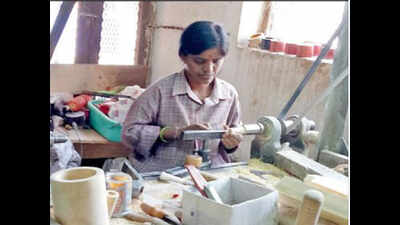
The colorful handmade toys made out of soft white wood, also called ` Aale Mara', and non-toxic vegetable colours were once the pride of Karnataka. Legend has it that the craft was patronized by Tipu Sultan during times of drought to help the people of Channapatna earn a living. He brought a family of artisans from Persia to make wooden columns and later wooden toys to ornate the columns.
Later, when the famous Mysore doll industry started dwindling, all the dolls for Dasara were made in Channapatna, and that's how the tradition lived.

“This was Channapatna's golden period. But soon demand for flat toned finish picked up, affecting the traditional lacquering of tonal gradation. This continued for a good 10 to 12 years. Then buyers found cheaper places such as China and other Asian nations for these products,“ says Atul Johri.
“Although a few groups and individuals continued to make the traditional wooden wares but the craft started losing its sheen as the tonal gradation techniques were lost owing to mass production in order to compete with the Chinese replicas, and lack of skilled artisans. This also led to people leaving Channapatna for odd jobs in Bengaluru,“ he adds.
“The replicas first land in Mysuru and then come to Channapatna, and sold along with the toys made here. The government has barely done anything to check this influx.The replicas were so cheap that the units and artisans in Channapatna couldn't sustain the competition and many started selling the cheap foreign imita tions, which was more profitable,“ says Ali Khan, a fourth genera tion craftsman.
Govt is indifferent, say artisans
The government con ducts training workshops but they haven't been of much help to the artisans in Chan napatna.
With no focus on the market dynamics for domestic and global consumption, these trainings are of little benefit. And, after the workshops, the artisans are left with no work and end up doing odd jobs.
The training kits distributed by the government includes impact drill and handsaw among other things.“These are useless for artisans.The kits were received by all and sundry. A tomato seller who got the kit sold it to me for Rs 2000,“ says Yusuf Ali Khan whose family has been living in Channapatna for the past 50 years. He said there were 300 to 400 artisan houses a decade ago, but today it's less than 100.
End of Article
FOLLOW US ON SOCIAL MEDIA







Photostories

Hot Picks
TOP TRENDING
Popular Categories
Hot on the Web
Top Trends
Ratan Tata HospitalisedIND vs BAN Live ScoreIND vs SL Live ScoreNew UPI Transaction LimitHurricane MiltonWorld First Top 10 TrillionairesStock Market TodayKerala Lottery ResultElection Results 2024Tom BradyIsrael Hezbollah WarSuryakumar YadavManagement Colleges of IndiaTop Medical Colleges of IndiaTop Engineering Colleges of IndiaTop Pharmacy Colleges of IndiaLive Cricket Score
Trending Topics
Diwali WishesBigg Boss Tamil 8 Contestants ListBhool Bhulaiyaa 3 TrailerNavratri Colours 2024Sanjay Leela BhansaliDurga Puja 2024Bigg Boss 18 House PhotoDevara CollectionBigg Boss 18Deepika PadukoneShailesh LodhaDevaraColdplayNational Film Awards 2024Swatantrya Veer SavarkarColdplay India tour 2025Watch NFL Live StreamDress To ImpressRatan TataWordle Answer
Living and entertainment
Latest News
CATS YouTube codes for October 9, 2024: Earn 500 CATS and know how to redeem the codesHurricane Milton: Why Tampa area is so vulnerable to stormsBeard Trimmer with Titanium Blades: Style Your Beard to Perfection with Unmatched SharpnessTHE World University Rankings 2025: IISc Leads India , Check the List of Top 10 Indian Institutes HereAre HDFC Bank, Axis, Kotak a value buy or value trap for investors?Triptii Dimri on emotional struggles following criticism for 'Animal’: Side effect of being in a mainstream filmDid the threat of ‘first Hindu CM’ help NC-Congress win J&K?Ethel Kennedy, widow of Senator Robert F Kennedy Sr suffers stroke in sleep, hospitalisedRanbir Kapoor's UNSEEN BTS pic from 'Shamshera' goes viralSum 41’s Deryck Whibley accuses former manager of sexual abuse in new memoirMudassar Aziz: A filmmaker needs to carefully study while pegging a film around the idea of stardomHyundai aims to raise up to $3.3 billion in record India IPOPrabhas starrer 'Kalki 2898 AD' gears up for its release in JapanWho is Aniruddhacharya Maharaj? Know more about Pookie Baba’s life journey and net worthOnly a true creative genius can spot the odd unicorn in 12 seconds!Will Allu Arjun be able to beat Prabhas in North America with Pushpa 2?OnePlus 12 is available for Rs 35,314 only on Amazon; check exchange deal and bank offersIndian man goes ‘skinny-dipping’ at an Australia's beach that isn’t even on Google Maps | Watch video
Copyright © 2024 Bennett, Coleman & Co. Ltd. All rights reserved. For reprint rights: Times Syndication Service