
- News
- City News
- bengaluru News
- At 42, most women in Karnataka fray since 1996
Trending
This story is from May 7, 2024
At 42, most women in Karnataka fray since 1996
Karnataka has 42 women candidates in the Lok Sabha election, the most in decades. Despite historical low female MP success rates, the state shows potential for change. Results will reveal the impact of increased female representation on June 4.

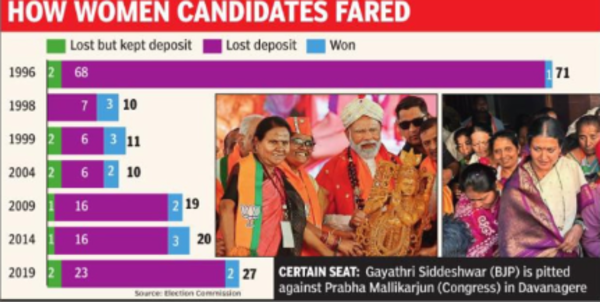
The last time Karnataka had more than 42 women candidates was in 1996, when 71 were in the fray. Only one emerged victorious. This time, despite the increase in the number of women, they account only for 8.8% of the total number (474) of candidates.
Given that independents or those from smaller parties seldom win LS polls, all eyes will be on candidates from Congress and BJP.

Among major states, Karnataka has the dubious dis tinction of giving women the least chance of winning. Analysis of data from 1996 shows only 5% get elected. This year, at least one woman from the state will enter Parliament since both national parties have fielded a woman in Davanagere. BJP has fielded Gayathri Siddeshwar and Con gress, Prabha Mallikarjun.
The other 34 women in the fray are mostly independents or from smaller parties. Of these, the fortunes of 15 will be sealed on Tuesday.
Between 1996 and 2019, Karnataka saw 168 women contesting but only nine won while 142 lost deposits. Seventeen others lost but retained their deposit. That means, 5% of them won, while more than 84% forfeited deposits.
Reflects national trend
Thenational average is alsounderwhelming. Even statesknown for their matrilinealcultures such as Kerala andManipur have performed nobetter than the rest of thecountry. Overall, of the 3,462women who contested the pastseven Lok Sabha elections,only 376 or 11% won.
In 2019, Karnataka had sent two women MPs to Parliament — BJP’s Shobha Karandlaje from Udupi-Chikmagalur and Sumalatha, an independent from Mandya.
Women functionaries across parties and experts that TOI spoke with attribute the dismal performance of to a lack of support from political parties and deeply entrenched societal biases against women in leadership roles.
End of Article
FOLLOW US ON SOCIAL MEDIA









Photostories

Hot Picks
TOP TRENDING
Popular Categories
Hot on the Web
Top Trends
Hurricane MiltonRatan Tata NewsNew UPI Transaction LimitRatan Tata DiesPM ModiRafael NadalShantanu NaiduTom BradyStock Market TodayNarayana MurthyIsrael Hezbollah WarRatan Tata Inspiring QuotesManagement Colleges of IndiaTop Medical Colleges of IndiaTop Engineering Colleges of IndiaTop Pharmacy Colleges of IndiaLive Cricket Score
Trending Topics
Diwali WishesBigg Boss Tamil 8 Contestants ListBhool Bhulaiyaa 3 TrailerVettaiyan Twitter ReviewSanjay Leela BhansaliVettaiyan ReviewSalman KhanDevara CollectionBigg Boss 18Deepika PadukoneShraddha KapoorRatan Tata Passed AwayColdplayVettaiyan Movie ReviewSwatantrya Veer SavarkarDussehra 2024Watch NFL Live StreamDress To ImpressRatan Tata DeathWordle Answer
Living and entertainment
Latest News
How Chennai Night Race swerved past challenges to zoom toward a brighter motorsports futureAll-Star Tower Defense (ASTD) Codes October 2024Ranveer Singh: I have a man crush on Tiger ShroffWho is Noel Tata? Meet Ratan Tata’s half-brother, who could be successor at Tata TrustsHow to make Ginger Turmeric Shots for seasonal changeWhen Amitabh Bachchan slept on Marine Drive with rats as neighbours: I didn’t have a place to stay'Stree 2' hits OTT after record-breaking box office success: Here’s where to watch!Da Hood Codes October 2024: Unlock new weapons to elevate your gameplay'Thalapathy 69': Here's how much Vijay will be earning in his last film!How The Tarot Suit Can Be Associated With The Elements'You're drunk': Britons stunned by BBC app's shocking 18,995 mph wind forecast!Hanging Lights For Living Room: Transform and Illuminate Your SpaceICC Women's T20 World Cup: Harmanpreet Kaur, Smriti Mandhana, bowlers demolish Sri Lanka as India get NRR boostArko: The reach of Bollywood is greater than single albumsOnly a true creative genius can spot the odd unicorn in 12 seconds!Ratan Tata no more: When his throwback pic had netizens saying he looked like a Hollywood star'Vettaiyan' Twitter review: Rajinikanth shines in this investigative thrillerPfizer's cancer drug combo improves overall survival in late-stage study
Copyright © 2024 Bennett, Coleman & Co. Ltd. All rights reserved. For reprint rights: Times Syndication Service