
- News
- City News
- bengaluru News
- An act that blends art with human emotions
Trending
This story is from January 13, 2017
An act that blends art with human emotions
The performance is inspired by Japan’s Kintsugi art and Chhau Masks
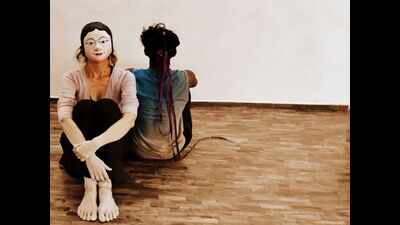
The performance is inspired by Japan’s Kintsugi art and Chhau Masks

“At different points in life, we have to go through overpowering experiences that may make us feeling sad, shameful, guilty or melancholic for long period of time. Although not very apparent in all cases, such experiences do break us a little or leave a scar in our psyche. Through the performance, we are trying to examine people’s ability to count upon themselves while dealing with such unpleasant memories. For this, we have tried to merge the philosophy behind the Japanese ‘golden repair’ art form, which tries to identify the history of the object and mend the broken parts, keeping the marks visible. And in the process, adds a new dimension to the object making it look more beautiful than the original — just like adding a new perspective to life and making one a better person,” explains Asha, who is a movement artist of Polish origin.
The act, according to Asha, is a curious amalgamation of props like the Chhau masks and various Bharatnatyam mudras that aims to foster human communication and empathy.
Artiste Nakula Somana, who facilitated the act, describes it as an artistic reflection of the current state of affairs — the happenings that stir our thoughts and impact the manner in which we approach and evaluate an experience. “What is broken, is not necessarily ugly. It’s all about how one reflects on and handles various life situations,” says Nakula. The performance formed part of the Kha Foundation’s FoCoCo III presentation.
End of Article
FOLLOW US ON SOCIAL MEDIA




Photostories

Hot Picks
TOP TRENDING
Popular Categories
Hot on the Web
Top Trends
Ratan TataRatan Tata HospitalisedIND vs BAN Live ScoreRatan Tata DiesNew UPI Transaction LimitWorld First Top 10 TrillionairesStock Market TodayKerala Lottery ResultElection Results 2024Tom BradyIsrael Hezbollah WarSuryakumar YadavManagement Colleges of IndiaTop Medical Colleges of IndiaTop Engineering Colleges of IndiaTop Pharmacy Colleges of IndiaLive Cricket Score
Trending Topics
Diwali WishesBigg Boss Tamil 8 Contestants ListBhool Bhulaiyaa 3 TrailerDurga Puja WishesSanjay Leela BhansaliVettaiyan ReviewBigg Boss 18 House PhotoDevara CollectionBigg Boss 18Deepika PadukoneShailesh LodhaDevaraColdplayNational Film Awards 2024Swatantrya Veer SavarkarColdplay India tour 2025Watch NFL Live StreamDress To ImpressRatan Tata DeathWordle Answer
Living and entertainment
Latest News
Ratan Naval Tata: The inspiring journey of Padma Vibhushan laureate and golden-hearted business tycoonSamantha Ruth Prabhu shares playtime with Chinmayi Sripaada's daughter, says 'It took her 4.5 seconds to disown her parents'Mohanlal remembers late TP Madhavan: ‘His love and affection were akin to that of a father towards me'Buy only from Sanatanis, says Akhara ParishadIshan Kishan named Jharkhand captain for Ranji TrophyPadma Vibhushan industrialist Ratan Tata dies at 86Ratan Tata: The industry titan with a golden heartManifesting with the 10/10 Portal: Zodiac-based guide for 2024Nobel Laureate Geoffrey Hinton’s Everest-sized connection to IndiaColdplay 2025 Mumbai shows: How to grab infinity tickets, sale dates, and key details for their world tourJaved Akhtar says he regrets failure of his first marriage with Honey Irani: 'It was my irresponsible attitude, my drinking'Only a true creative genius can spot the odd unicorn in 12 seconds!NCR gets ready to say alvida Ravan, yet againIndian man goes ‘skinny-dipping’ at an Australia's beach that isn’t even on Google Maps | Watch video"We all still love him": TNA producer and former Knockouts Champion hopes for AJ Styles’ return to the companyAnupama's 15-year leap: Toshu's transformation and new actor Manish Nagdev joins amidst dramatic fire crisisProducer Vijay Kiragandur reveals major updates on Yash starrer 'KGF 3' and Rishab Shetty starrer 'Kantara 2'Aamir Khan takes Amitabh Bachchan back to his Kolkata days
Copyright © 2024 Bennett, Coleman & Co. Ltd. All rights reserved. For reprint rights: Times Syndication Service