
- News
- City News
- ahmedabad News
- Yatra adds muscle to traditional akhadas
Trending
This story is from July 4, 2016
Yatra adds muscle to traditional akhadas
They sweat it out from the morning to late afternoon atop trucks and on the roads, showing off their rippling muscles made to glisten with mustard oil.
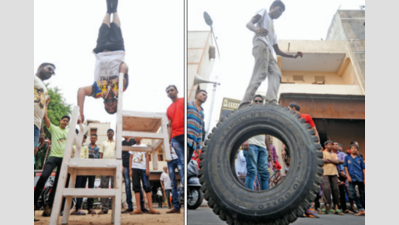
This year, participants will show some new skills like the balancing act on two chairs and on a truck tyre, apart from the usual exercise regime.
"This year, Vijay Shinde, a Mumbai-based bodybuilder and gym trainer, is participating in the procession. He wanted to experience the energy and adulation, which a gym can't offer," said Rupesh Chauhan, 38, a resident of Dariyapur. "That is the very reason why many of the youths, who are settled in the western city parts and work as gym instructors, can be seen at the yatra."
For Chauhan, akhada training started when he was eight. Today, he supervises training at the SVM Akhada, which is 65 years old. And he has been participating in the procession for three decades. "We have kids coming to the akhada from areas such as Dariyapur, Shahpur, and Madhavpura. They get enamoured by the Rath Yatra platform," said Chauhan who attributes his success as a bodybuilder at the state level and a weightlifter at the national level to his training in the akhada.
This year, his akhada is going to show off some new skills, such as balancing on a truck tyre and balancing on two chairs, apart from the usual exercise regime.
Akhada gurus don't mince words while talking about the infrastructure though. The traditional sand-filled akhada pits where participants used to wrestle have vanished from almost all akhadas as gym equipment have made a silent entry into many of them.
Thirty akhadas have been, traditionally, an integral part of the Rath Yatra procession. Few know how that traditional 30 secured their place. But one tradition has kept the other tradition alive at least in the Walled City.

About the Author
Parth ShastriEnd of Article
FOLLOW US ON SOCIAL MEDIA





Hot Picks
TOP TRENDING
Explore Every Corner
Across The Globe
Trump TariffsTravis KelceIPL Live ScoreNestor Cortes InjuryPat McAfeeNFL RumorsJim CramerTaylor SwiftGary BettmanDwyane WadeBest Strains in Schedule1All Schedule 1 SuppliersHailee SteinfeldGreen Card HoldersJanet JonesCBSE CUET OrientationIPL Match TodayPamban BridgeJoe BurrowBengal Teacher Soma DasKarnataka 2nd PUC ResultBill Belichicks GirlfriendJapanese Grand Prix 2025April Bank HolidayIPL Live Score 2025IPL Purple CapAll Schedule 1 SuppliersIPL Orange CapIPL Points TableIPL Schedule 2025
Hot on the Web
Indian Idol 15 WinnerRam Navami WishesRam Navami QuotesVitamin SupplementsKareena Kapoor KhanHappy Ram Navami WishesRam Navami MessagesSikandar Box Office CollectionSikandar Movie ReviewRanveer AllahbadiaBaba Vanga PredictionsColourful BirdsPush Ups BenefitsWalking BenefitsL2 Empuraan ReviewNational Parks For RhinoSabyasachiPapaya BenefitsVinegar BenefitsChia Seeds For HairMedication BenefitsIndia Tiger SafarisWorld Unique BirdsUs VisaH-1B VisaPiyush GoyalShivaji SatamNavratri ColoursUK Immigration PoliciesMoong Dal Paneer Dosa Recipe
Trending Topics
GTA 6 Fall Launch 2025API Ashwini Bidre murder caseDigvesh RathiAP ECET RegistrationCUET 2025 OrientationNEET Seats IncreasedAP Inter ResultKarnataka 2nd PUC ResultKapil DevJasprit BumrahHardik PandyaWho Won Yesterday MatchVijay ShankarSunrisers Hyderabad vs Gujarat TitansHarshal PatelSanju SamsonVirat KohliKevin PietersenMS DhoniNYT ConnectionsMark ZuckerbergGhibli Style ImageElon MuskDonald Trumps Death PredictionWordle TodayTrumps Reciprocal TariffsBank Holidays AprilPublic Holidays AprilCraftmine Update
Popular Categories
HeadlinesSports NewsBusiness NewsIndia NewsWorld NewsBollywood NewsHealth+ TipsIndian TV ShowsTechnologyTravelEtimesHealth & FitnessWWENFLICC Champions TrophyAstrologyWeather TodayIPLHow to watch IPL 2025How to watch IPL in CanadaHow to watch IPL in USAIPL TeamsStock Market HolidaysNSE HolidaysBSE HolidaysMCX HolidaysTechnology NewsInternational SportsPublic HolidaysBank Holidays
Latest News
Braves and Marlins forced to cancel April 6 game and rearrange pitching plans ahead of DoubleheaderGay asylum seeker deported to El Salvador prison under Trump crackdown“Love to see this”: Fans celebrate Jesse Winker not just for his game winning hits but for being a loving dadMetal companies to tap demand in home marketRFK Jr. visits the family of the second unvaccinated child who died of measles: What are the complications of the disease?Blake Snell’s absence leaves Dodgers with tough rotation decisions early seasonDalal Street eyes on Trump tariff fallout, RBI's rate decisionNestor Cortes' injury returns at worst possible time creating uncertainty in Brewers' rotation'A Minecraft Movie' strikes gold with $301 global box office debut; becomes most successful video game adaptationIL&FS seeks more time to complete resolutionIndian Idol 15 Winner: Manasi Ghosh lifts the trophy with a whopping cash prize of Rs 25 Lakhs and a brand new car3 dead after medical helicopter crashes into sea off southwest Japan‘Veera Dheera Sooran’ box office collections day 11: Vikram starrer crosses Rs 37 cr; sees steady second weekend surgeDonald Trump defends sweeping tariffs as 'beautiful thing' amid global economic concernsUnknown entity faked docus: Younger Lodha brother’s firm‘L2: Empuraan’ box office collections day 11: Mohanlal’s film collects Rs 98.35 croresSteel to Jaguars: Tatas evaluate US tariffs hitSikandar box office collection Day 8: Salman Khan starrer finally crosses Rs 100 crore mark after second weekend
Copyright © 2025 Bennett, Coleman & Co. Ltd. All rights reserved. For reprint rights: Times Syndication Service