
- News
- City News
- ahmedabad News
- ‘Govt should devise SOP for vulture tissue collection’
Trending
This story is from June 28, 2021
‘Govt should devise SOP for vulture tissue collection’
In a research published this April, “Nimesulide poisoning in white-rumped vulture Gyps bengalensis in Gujarat, India,” the authors found the anti-inflammatory drug nimesulide in the tissues of all the dead vulture from Gujarat they studied.
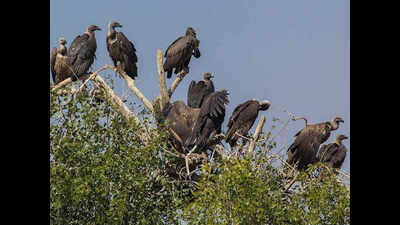
While 13 vultures died after eating the carcass of a pig in Jalpaiguri district, in West Bengal, 19 vultures died in Sibsagar, Assam possibly due to poisoning However, tissue samples could not be collected for analysis

Besides suggesting a ban on use of nimesulide in veterinary treatment, the researchers have also recommended that the Gujarat government devise a standard methodology for collection of tissues of dead vultures for toxicological examination.

The research paper pointed out that between March and April 2020, there were at least two other incidents of deaths of white-rumped vultures in Assam and West Bengal.
While 13 vultures died after eating the carcass of a pig in Jalpaiguri district, in West Bengal, 19 vultures died in Sibsagar, Assam possibly due to poisoning However, tissue samples could not be collected for analysis.
The study found that residues of all the 32 most commonly used pesticides in the tissues from kidneys, livers and guts of the four white-rumped vultures collected from Sanand and Dhrangadhra were below detection limits.
It was confirmed that the vultures did not die due to any of the tested toxic pesticides. Subsequently, the tissues were analysed for fourteen drugs as listed in methodology. Of all the fourteen drugs analysed, only nimesulide was detected in all the tissues considered for the investigations.
Banned drug used widely
The research paper stated that despite the ban on diclofenac, it was reported to have accounted for 10–46% of all NSAIDs available in the Indian market for veterinary use. Studies revealed that in addition to diclofenac, other NSAIDs, namely, aceclofenac, ketoprofen, nimesulide, flunixin and carprofen are also toxic to Gyps vultures.
White-rumped vultures
White-rumped vultures are listed as a critically endangered species since the year 2000. Their population have drastically reduced due to the effects of diclofenac presence in animal carcasses. Diclofenac was banned for veterinary use in India from 2006, but the vulture population is yet to recover. White-rumped vultures are included under Schedule I of Indian Wildlife Protection Act 1972
What is nimesulide
The paper stated that nimesulide is a nonsteroidal anti-inflammatory drug. Data from a case study on drug-induced liver injury of drugs, namely, nimesulide, ketoprofen, ibuprofen, diclofenac and paracetamol in Italy had revealed nimesulide to be associated with higher, and ibuprofen and ketoprofen with moderate risk of hepatotoxicity in humans. Because of the death of a six-year-old child due to nimesulide-induced concomitant hepatic and renal failure in India, controversy exists in the safety of the drug for humans.
In many countries, including the USA, UK, Canada, Australia, New Zealand and Japan, nimesulide is not permitted for human use due to its high risk of liver damage.
However, it is being widely used in India (banned for use in under-12 patients).
End of Article
FOLLOW US ON SOCIAL MEDIA






Hot Picks
TOP TRENDING
Trending Stories
In City
Entire Website
- 'Assigned task was not hers': Work pressure at EY Pune kills CA daughter from Kerala
- Indus Water Treaty: India serves formal notice to Pakistan, seeks modification
- US Fed cuts interest rates by 50 bps in a first since 2020: Why it matters for India
- Meet Jonathan, world's oldest living land animal, who is 191 years old
- Did Kamala Harris pose with Sean ‘Diddy’ Combs? Here’s the truth
- Vivek Ramaswamy explains who's to blame for 'Haitian immigrants eating cats' row
- How quick-thinking Bengaluru Metro staffer saved man who jumped on tracks
- Top-notch drone goes down after technical failure off Chennai just ahead of mega deal with the US
- Kimberly Guilfoyle now shares a kissing photo with Donald Trump Jr amid Bettina Anderson row
- Florida woman who sold all her possessions for a 3-year luxury cruise banned for WhatsApp messages
- 'Work stress killed my daughter,' says mom in letter to MNC’s India head
- Walkie-talkies in Lebanon blasts were made at least a decade ago
- Will this man who wants to ‘cancel’ Adani becomeLankan president?
- Many behind crime: Dad of RG Kar victim to CBI in 3-page letter
- Rishabh Pant gets angry : 'Mere ko kyu maar rahe ho?' - Watch
- 1st Test Day 1 Live: Jaiswal, Pant revive India innings after triple blows
- Was Mossad behind hundreds of Hezbollah pagers exploding all at once?
- Accenture delays promotions globally, after denying salary hikes to employees in India
- 'Attempt to polish your failed product': Nadda's response to Kharge's letter to PM Modi
- Haryana polls: BJP releases party manifesto

Popular Categories
Hot on the Web
Top Trends
Trending Topics
Diljit DosanjhsJatt Juliet 3 OTT ReleaseAbdu RozikKhatron Ke Khiladi 14Ocean WaterBigg Boss 18Sunita AhujaNandhan ReviewLebanon Pager BlastPitra Paksha 2024CheetahsKangana RanautAditi Rao HydariDalljiet KaurHoliday DestinationVikas SethiBest Selling Earbuds Under 1000Apple iPhone 16 ProVirat KohliWordle Answer
Living and entertainment
Latest News
US interest rate cut: 'Welcome news for Americans' says Kamala; Fed 'playing politics', claims TrumpWhen Aishwarya Rai opened up about why she and her husband Abhishek Bachchan took 4 months to name their daughter Aaradhya Bachchan'Wearing undergarments must but...': Delta's 'specific' memo for flight attendantsMitigating muscle fatigue and tension with physiotherapy techniquesFoods to include in the Monsoon diet according to AyurvedaDelhi housing society’s letter on ‘receiving too many parcels in a day’ goes viralNXT Champion Takes A Jab At WWE Star CM PunkThe man who wants to 'cancel' Adani from Sri LankaHow to lower your pet dog's anxiety during festive celebrationsMumbai railway official loses Rs 9 lakh as he dials ‘0’ from his phone; presented before 'judge'On way to Gurgaon pub, 5 students suffer injuries after 'rented' car collides with railing at Delhi's Geeta Colony flyoverAishwarya Majmudar looks regal in an ethnic avatar, see picOTET Answer Key 2024 released at bseodisha.ac.in, raise objections till Sept 28: Subject-wise direct links hereAllu Aravind on Bollywood filmmakers having limited perspectives in their films: 'They are locked between Bandra and Juhu'Plant sprouting from Taj's dome sparks worries over upkeepSalman Khan makes a dapper appearance at the Mumbai airportWhat is a walkie talkie that was used as a bomb in Lebanon Throwback: When Neetu Kapoor revealed about her playful competition with Alia Bhatt over Raha's first words
Copyright © 2024 Bennett, Coleman & Co. Ltd. All rights reserved. For reprint rights: Times Syndication Service