
- News
- City News
- ahmedabad News
- 'Boom in vehicles, drop in public transport usage fuel parking crisis'
Trending
This story is from May 15, 2024
'Boom in vehicles, drop in public transport usage fuel parking crisis'
Ahmedabad faces congestion due to private vehicles. CEPT University's project at the Summer Exhibition highlighted the impact on urban mobility. The city's parking policy review showed incomplete implementation of measures like monthly permits and progressive taxes.
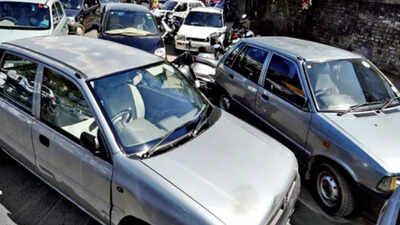

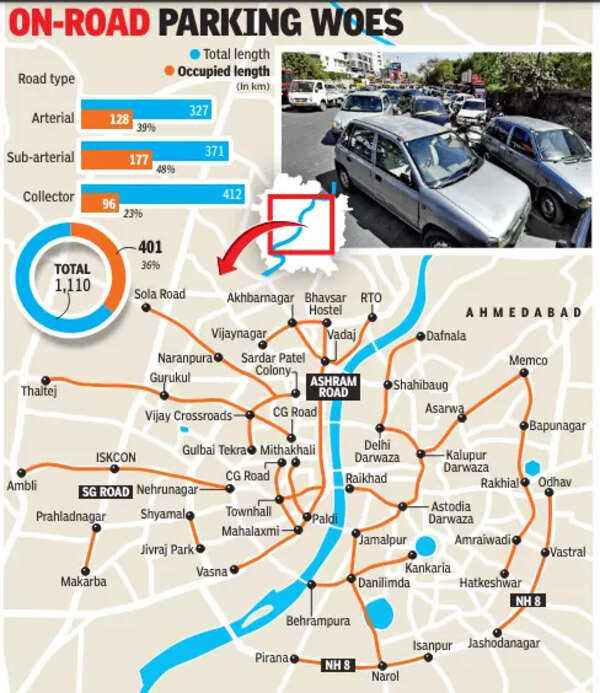
A project by CEPT University student Devilal Pimple showcased in the ongoing Summer Exhibition delved into the city's parking patterns. Conducted under the Studio Unit 'Strategic Plan for Urban Transport Subsystem: Ahmedabad' by Nikita Bhakuni and Shalini Sinha at the Faculty of Planning, the study highlighted the shift towards private vehicle use and its impact on urban mobility. "Individuals are increasingly opting for private vehicles over public transport for ease. This has made on-street parking a popular choice, leading to parking encroachments and traffic congestion," Pimple stated in the project brief.
The study revealed that approximately 56% of city roads are narrower than 30m, making them susceptible to traffic snarls when cluttered with parked vehicles.
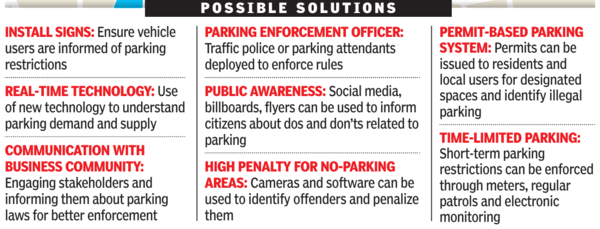
A review of the city's parking policy, from the integrated mobility plan (IMP) by Ahmedabad Urban Development Authority (Auda) in 2011 to the parking bylaws announced in 2023, showed mixed progress. Implemented measures include assessing parking demand and connected charges and reserving 60% of commercial building space for visitors. However, several policies remain unimplemented, such as issuing monthly and annual parking permits and applying progressive taxes for additional vehicles. The study suggested measures like having a single authority to manage parking, variable parking charges based on demand, and substantial fines for violations.
End of Article
FOLLOW US ON SOCIAL MEDIA










Photostories

Hot Picks
TOP TRENDING
Popular Categories
Hot on the Web
Top Trends
IND vs AUS Live ScoreBaba Siddique NewsVirat KohliRussell WilsonsSpacex StarshipRahul DravidWho was Baba SiddiqueBabar AzamNTA SWAYAM July RegistrationLawrence BishnoiAmazon LayoffsTaylor SwiftManagement Colleges of IndiaTop Medical Colleges of IndiaTop Engineering Colleges of IndiaTop Pharmacy Colleges of IndiaLive Cricket Score
Trending Topics
Diwali WishesDussehra 2024 QuotesDussehra WishesVettaiyan OTT ReleaseVettaiyan CollectionVettaiyan ReviewNatasa StankovicDevara CollectionBigg Boss 18Deepika PadukoneShraddha KapoorRatan Tata Passed AwayJigra Movie ReviewVettaiyan Movie ReviewSwatantrya Veer SavarkarDussehra 2024Star Health Hacker DemandedViral MemesUltimate Football Codes October 2024Wordle Answer
Living and entertainment
Latest News
How each zodiac sign handles emotional distance in relationshipsBook review: 'The Scientist Entrepreneur' by Dr Kalpana Sankar is a nuclear scientist’s inspiring journey of women’s empowermentDid BTS' V get promoted to corporal in the South Korean military? recent appearance at an orchestra event has fans speculatingParas Mhambrey joins Mumbai Indians as bowling coachSalman Khan’s security beefed up after Baba Siddiqui’s murder; ‘Sultan’ star looked uncomfortable after visiting the late politician’s family at 3 amRanji Trophy: Thriller in the making as Krunal Pandya fifty helps Baroda lead by 226 runs vs MumbaiBiker’s death ignites village fury in Odisha's Boudh, massive traffic jam on NH-57SpaceX's fifth Starship test flight achieves historic booster catchKrushna Abhishek shares a heartwarming post for mama Govinda; says 'jab body mein adha blood supremely talented actor Govinda ka ho...'News brief: 'Who is listening? Modi?': Kapil Sibal takes a dig at RSS chief Mohan BhagwatKenya's Ruth Chepngetich breaks women's world record at Chicago MarathonZodiac signs likely to have soul connectionsAI’S Oppenheimer'Points towards failure of CM': Sanjay Raut slams Maharashtra govt over Baba Siddiqui's killingMahela Jayawardene returns as Mumbai Indians head coachMidnight queues, long waits, bad advice: It's not easy getting therapy in IndiaAshton Kutcher and Mila Kunis consider leaving Hollywood amid Sean 'Diddy’ Combs' arrest fallout: ReportAlia Bhatt was rejected by Sanjay Leela Bhansali for Amitabh Bachchan and Rani Mukerji starrer 'Black'
Copyright © 2024 Bennett, Coleman & Co. Ltd. All rights reserved. For reprint rights: Times Syndication Service