
- News
- Business News
- India Business News
- Union Budget 2023: Increase corporate tax, focus on fiscal prudence, says Dr Sanjaya Baru
Trending
This story is from December 13, 2022
Union Budget 2023: Increase corporate tax, focus on fiscal prudence, says Dr Sanjaya Baru
Budget 2023: Dr Sanjaya Baru talks about his top ideas for Union Budget 2023, the need for fiscal discipline, the importance of better centre-state coordination.
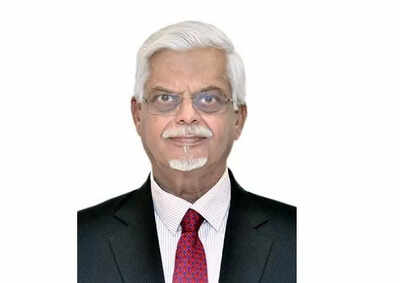
Union Budget 2023: The top idea for this Budget is to offer a medium term pathway to investors and consumers, says Sanjaya Baru.
India is an important part of the global economy and we are not decoupled, says Dr Sanjaya Baru, Distinguished Fellow, Centre for Air Power Studies. In an interview with Smriti Jain, Dr Sanjaya Baru talks about his top ideas for Union Budget 2023, the need for fiscal discipline, the importance of better centre-state coordination and more. Edited excerpts:
Amidst global headwinds, how decoupled is the India growth story?
This is the most important question for India today.
While maintaining the fiscal deficit target, what should be the quality of the capital expenditure?
As far as the fiscal deficit is concerned, we are off the glide path. This year the government will honestly have to address this question.
We can't simply say we believe in reducing the fiscal deficit, but don't end up doing so. A new glide path looking at the monetary and fiscal policy, inflation and growth, may be required. That requires some medium term focus in the Budget and not just focus for this year.
What is holding the private sector back?
The most important thing holding the private sector back is lack of adequate demand. The structure of demand is warped in favour of the rich. The recovery from COVID has been K shaped. The rich are becoming richer and there is increasing unemployment. Lower middle income people are not spending enough, either they don't have cash or they have become risk averse.
If you look at automobiles and FMCG goods, the demand pattern suggests that while the upper middle class, urban rich, and corporate sector are generating demand, a bulk of the population has become risk averse. Uncertainty has gripped families and households.
As a result the capacity utilisation is still very low. Private investment requires some incentive. That can only come from a revival of demand, which in turn can come from an increase in public expenditure. It should also come from an increase in exports, since it is an important driver of growth.
What can be done to boost exports at a time when global demand is down?
There are the simpler policy options of pursuing a more export friendly exchange rate. We have been allowing the rupee to depreciate, but even that has been a hesitant process.
The second is to be able to grab growing markets. We have negotiated FTA with the UAE, Australia but the other FTAs have still not taken off. We have opted out of RCEP, which is a wrong decision. The East Asian economies are extremely important for India. We are not looking at the long term or medium term consequences or the inability to competitively remain within the markets of East Asia. A comprehensive trade policy strategy is necessary. This government has not produced a trade policy for 3-4 years.
What are your top 3 ideas for the Union Budget 2023?
The top idea for this Budget is to offer a medium term pathway to investors and consumers. In the last few years, budget speeches are full of what has been done in the past, with very little focus on the future.
Firstly, the focus of the Budget speech has to be on the action being taken over the next 6 months to 1 year. Second, there is a need for the government to increase the tax GDP ratio by increasing corporate tax. One of the big mistakes that the late Mr Arun Jaitley made under the influence of economists is to reduce the corporate tax. It has not yielded any benefits.
It's not enough that GST is mopping up revenues, the direct tax to GDP ratio is not high. You cannot increase it by simply raising income tax rates. The corporate tax can be raised, particularly this year when corporates are doing well.
The big companies are showing higher profits, driving the stock market. We have more millionaires and billionaires despite lockdown and exports not growing. The two biggest billionaires, whether Adani or Ambani, are making money at home, not globally.
Finally, the most important thing is a greater synergy between the central and state governments. Incentivise state governments because most businessmen will tell you that when you start hitting the ground there are any number of hurdles.
What is the road ahead for the National Monetization Pipeline?
It will depend on the performance of the economy. If there is adequate confidence that the growth rate will pick up, all macro economic initiatives will bear fruit.
If investors and consumers continue thinking that the Indian economy is not going to gather pace, most households and companies will remain risk averse.
PLI, Gati Shakti, Make in India, Startup India...what has been the impact of the many schemes?
These are all good schemes, incidentally Make in India was originally launched by Manmohan Singh in 2011. If you see the 12th Plan document, there is a national manufacturing strategy. That is an essential part of what Prime Minister Modi has renamed as Make in India.
PLI is an interesting initiative, particularly in core sectors like pharmaceuticals, IT, hardware etc. Greater coordination between Centre and states is necessary for these initiatives to bear fruit. Manufacturing sector growth remains stuck at 16-17% of GDP.
In 2018 PM Modi talked about India being a $5 trillion economy and raising the manufacturing share in national income to 20% of GDP. Manufacturing growth is concentrated in 4 or 5 states.
What is the thought direction ahead for GST?
The GST's introduction lay in the late Arun Jaitley's ability to work with state governments. We have to return to that concept.
Unfortunately under the second Modi government, the Centre-state financial relations have suffered. While the Budget cannot tinker with GST, you can convene the council meeting any time. The Centre is depending so much on GST because of its inability to raise taxes through direct tax.
Every year the common man expects relief on the income tax front...
The common man doesn't pay tax, the tax paying population of India is in the top 5%. There is no need to tinker with tax rates, it's really compliance which is the challenge. What the government has to do, and part of it has already been done, is to focus on the needs of the poor. Recently a group of economists have suggested focused intervention on provisioning of healthy food.
What can the government do to improve employment?
There is enormous potential for generating employment in the services sector. Another is labour intensive manufacturing, investment in textiles etc. We have lost a lot of export capacity to Bangladesh. Give tax breaks to companies which are increasing employment. That would be an extremely important policy initiative.
Amidst global headwinds, how decoupled is the India growth story?
This is the most important question for India today.
If you read the monthly economic report of the Finance Ministry, the consistent argument is that the domestic economy is doing well, but there are external challenges. In 2009, after the Transatlantic financial crisis, a similar argument was put forward. It required the courage of the then RBI governor Subbarao, who said India is not decoupled. Somebody in the government needs courage to say that this decoupling argument is nonsense. We are an important part of the global economy. External trade was as high as 50% of national income till a few years ago. That has now come down to about 30-35%, but it's still a very high proportion of the national income.
While maintaining the fiscal deficit target, what should be the quality of the capital expenditure?
In the 2022 Budget, Nirmala Sitharaman spoke about the role of public investment. Private investment and private savings are not picking up. As a result there isn't enough investment demand in the country.
As far as the fiscal deficit is concerned, we are off the glide path. This year the government will honestly have to address this question.
We can't simply say we believe in reducing the fiscal deficit, but don't end up doing so. A new glide path looking at the monetary and fiscal policy, inflation and growth, may be required. That requires some medium term focus in the Budget and not just focus for this year.
What is holding the private sector back?
The most important thing holding the private sector back is lack of adequate demand. The structure of demand is warped in favour of the rich. The recovery from COVID has been K shaped. The rich are becoming richer and there is increasing unemployment. Lower middle income people are not spending enough, either they don't have cash or they have become risk averse.
If you look at automobiles and FMCG goods, the demand pattern suggests that while the upper middle class, urban rich, and corporate sector are generating demand, a bulk of the population has become risk averse. Uncertainty has gripped families and households.
As a result the capacity utilisation is still very low. Private investment requires some incentive. That can only come from a revival of demand, which in turn can come from an increase in public expenditure. It should also come from an increase in exports, since it is an important driver of growth.
What can be done to boost exports at a time when global demand is down?
There are the simpler policy options of pursuing a more export friendly exchange rate. We have been allowing the rupee to depreciate, but even that has been a hesitant process.
The second is to be able to grab growing markets. We have negotiated FTA with the UAE, Australia but the other FTAs have still not taken off. We have opted out of RCEP, which is a wrong decision. The East Asian economies are extremely important for India. We are not looking at the long term or medium term consequences or the inability to competitively remain within the markets of East Asia. A comprehensive trade policy strategy is necessary. This government has not produced a trade policy for 3-4 years.
What are your top 3 ideas for the Union Budget 2023?
The top idea for this Budget is to offer a medium term pathway to investors and consumers. In the last few years, budget speeches are full of what has been done in the past, with very little focus on the future.
Firstly, the focus of the Budget speech has to be on the action being taken over the next 6 months to 1 year. Second, there is a need for the government to increase the tax GDP ratio by increasing corporate tax. One of the big mistakes that the late Mr Arun Jaitley made under the influence of economists is to reduce the corporate tax. It has not yielded any benefits.
It's not enough that GST is mopping up revenues, the direct tax to GDP ratio is not high. You cannot increase it by simply raising income tax rates. The corporate tax can be raised, particularly this year when corporates are doing well.
The big companies are showing higher profits, driving the stock market. We have more millionaires and billionaires despite lockdown and exports not growing. The two biggest billionaires, whether Adani or Ambani, are making money at home, not globally.
Finally, the most important thing is a greater synergy between the central and state governments. Incentivise state governments because most businessmen will tell you that when you start hitting the ground there are any number of hurdles.
What is the road ahead for the National Monetization Pipeline?
It will depend on the performance of the economy. If there is adequate confidence that the growth rate will pick up, all macro economic initiatives will bear fruit.
If investors and consumers continue thinking that the Indian economy is not going to gather pace, most households and companies will remain risk averse.
PLI, Gati Shakti, Make in India, Startup India...what has been the impact of the many schemes?
These are all good schemes, incidentally Make in India was originally launched by Manmohan Singh in 2011. If you see the 12th Plan document, there is a national manufacturing strategy. That is an essential part of what Prime Minister Modi has renamed as Make in India.
PLI is an interesting initiative, particularly in core sectors like pharmaceuticals, IT, hardware etc. Greater coordination between Centre and states is necessary for these initiatives to bear fruit. Manufacturing sector growth remains stuck at 16-17% of GDP.
In 2018 PM Modi talked about India being a $5 trillion economy and raising the manufacturing share in national income to 20% of GDP. Manufacturing growth is concentrated in 4 or 5 states.
What is the thought direction ahead for GST?
The GST's introduction lay in the late Arun Jaitley's ability to work with state governments. We have to return to that concept.
Unfortunately under the second Modi government, the Centre-state financial relations have suffered. While the Budget cannot tinker with GST, you can convene the council meeting any time. The Centre is depending so much on GST because of its inability to raise taxes through direct tax.
Every year the common man expects relief on the income tax front...
The common man doesn't pay tax, the tax paying population of India is in the top 5%. There is no need to tinker with tax rates, it's really compliance which is the challenge. What the government has to do, and part of it has already been done, is to focus on the needs of the poor. Recently a group of economists have suggested focused intervention on provisioning of healthy food.
What can the government do to improve employment?
There is enormous potential for generating employment in the services sector. Another is labour intensive manufacturing, investment in textiles etc. We have lost a lot of export capacity to Bangladesh. Give tax breaks to companies which are increasing employment. That would be an extremely important policy initiative.

About the Author
Smriti JainEnd of Article
FOLLOW US ON SOCIAL MEDIA








Hot Picks
TOP TRENDING
Trending Stories
In Business
Entire Website
- Will banks open only for 5 days a week? Here’s what you should know about IBA’s proposal
- India set to be third largest economy, says S&P Global
- Dalal Street bull run continues! BSE Sensex crosses 69,000 for the first time; Nifty above 20,800
- Byju’s reduces notice period for employees as troubles mount
- Sensex surges over 900 points, Nifty above 20,550 as BJP state election wins bolster Modi's Lok Sabha 2024 prospects
- UltraTech to buy building materials business of Kesoram in 7,600 crore deal
- Tata Technologies stock debuts at a bumper 140% premium; share price at Rs 1200 on BSE
- Tata Technologies share allotment: How to check IPO allotment status, listing date, GMP
- BSE m-cap rides rally in Adani stocks, tops $4 trillion
- Charlie Munger, who helped Warren Buffett build Berkshire, dies at 99
- Gaganyaan tracking station site finalised at Cocos Islands
- Iran accuses Israel of 'mass murder' after pager explosions in Lebanon
- Why Bengal doctors not going back to work after talks with Mamata
- 'Subah bheege badam khate ho?': Virat to Gambhir
- Why was Hezbollah using outdated pagers in 2024?
- 'God protect Delhi': Swati Maliwal ups ante against Atishi; makes new claims
- Does India wish to disappear like Indus valley civilisation once did?
- Fired techie shares his 'survival story' on LinkedIn, post viral
- Yashasvi inches closer to overtaking this legend
- 'Undercover' cops crack temple heist, arrest robbers dressed as women



Popular Categories
Hot on the Web
Top Trends
Vince McMahonNPS Vatsalya LaunchDonald TrumpKolkata Doctor Rape CaseShreyas IyerTaiwan PagersGautam Gambhir Press ConferenceUGC Net ResultVirat KohliSukanya Samriddhi YojanaIsrael Hezbollah WarNEET UG Admission CriteriaDelhi CM's ListPager Attack in LebanonIndia Fastest Metro ServiceTech LayoffsLive Cricket Score
Trending Topics
NayantharaLuxury BrandBaby HippoKhatron Ke Khiladi 14Chinas EggAtishi Marlena Singh QualificationSunita AhujaGoat CollectionSalman Khan FarmhousePitra Paksha 2024CheetahsKangana RanautAditi Rao HydariDalljiet KaurHoliday DestinationVikas SethiBest Selling Earbuds Under 1000Apple iPhone 16 ProVirat KohliWordle Answer
Living and entertainment
Latest News
Throwback: When Aishwarya Rai said that dignity is 'extremely precious' to her; 'The way I have been brought up.....'Shilpa Shetty just rolled out the latest sari trend 'a rainbow sari''Could restore sight': FDA grants 'breakthrough status' to Musk’s Neuralink 'Blindsight' implant. What it meansCM Punk to Step In as Guest Referee for NXT Title Match at WWE NXT Chicago EventWaterborne disease cases spiked after flood in VadodaraThe man who wants to 'cancel' Adani from Sri LankaSuriya to play the antagonist in 'Dhoom 4', here's what we know11 get new lease of life with organs from two in SuratMrBeast aka Jimmy Donaldson, Amazon sued by ‘Beast Games’ contestants over sexual harassment and chronic mistreatment allegations - reportsAmazon India appoints new country headBigg Boss Tamil 8: Actress Sachana Namidass to participate in the upcoming season?India 'very big abuser' of trade ties with US, says Donald TrumpJr NTR's 'Devara: Part 1' to have early morning showsGrieving mom's heart-wrenching letter blames toxic culture for daughter’s deathRicky Ponting is new Punjab Kings head coachA lot at stake as Mohun Bagan get ready for Asian footballHeart problem? Smart stetho can sense it in just 15 secsWhy am I feeling irritable? Common causes of mood swings and how to manage them
Copyright © 2024 Bennett, Coleman & Co. Ltd. All rights reserved. For reprint rights: Times Syndication Service