
- News
- Business News
- India Business News
- The women behind Alexa say diversity is crucial to success
Trending
This story is from March 10, 2021
The women behind Alexa say diversity is crucial to success
Amazon’s Alexa has become an integral part of many Indian households. You can tell her to play music, read out bedtime stories, control smart lights and appliances. Indians said “I love you” to Alexa at least once every minute last year.

Amazon’s Alexa has become an integral part of many Indian households. You can tell her to play music, read out bedtime stories, control smart lights and appliances. Indians said “I love you” to Alexa at least once every minute last year.
Women have played crucial roles in making Alexa a part of Indian living rooms. And all of them are convinced that diversity and inclusion are crucial to making Alexa a success in such a diverse country as India.
Snehal Meshram is senior manager for Alexa AI, natural language understanding (NLU) in Amazon India. Meshram built a multidisciplinary team of applied & research scientists, computational linguists, Indic language linguists, programme managers, and analytics experts in Bengaluru to launch Hindi on Alexa in September 2019. Currently, her team powers the Alexa NLU models for Indian English and Hindi.

Ramya Poosarla is a software development engineer responsible for building India-centric Alexa experiences. “It’s always Day 1 here and I get to influence the overall strategy by helping to define product features, driving the system architecture, and help invent Alexa's future in India in the process,” she says.
Diversity of all forms, she says, brings new perspectives, drives innovation and balanced decisions, all of which are critical for the growth of organisations. “Diversity fights unconscious bias and helps build great innovative products for customers,” she says.
Teena Sidana leads the business development team for Alexa Voice Services in India. She is responsible for integrating the power of Alexa to all third-party brands, which range from audio products like boAt and Motorola to TVs from Kevin and Shinco, and set top boxes from Dish.
“The role gives me the power to influence the strategy of these leading brands,” she says. Covid-19, she notes, has been harsh especially on women who are donning multiple hats at home while also giving their best at work. “Especially in such uncertain times, it is important for organisations to step up and extend support by creating a level playing field for all. Also, we as women should continuously challenge and change the gender paradigm by being equal and not regretting constantly having to multitask, being away from work at odd hours, etc.
Dipa Balakrishnan and Seema Somshekar are focused on creating delightful experiences for users.
Dipa Balakrishnan is senior manager for Alexa experience and engagement.
Seema Somshekar is content program manager.
Balakrishnan joined Amazon in the UK office in 2014 after she got her MBA degree from the London Business School. A key project that she is working on now is to bring Amitabh Bachchan’s voice experience to life on Alexa. “This has all the technical challenges plus the responsibility of getting the experience for an iconic voice and one of India’s best-loved celebrities just right,” she says.
Balakrishnan emphasises that diversity of all forms – gender, language, educational backgrounds, etc – is important to make sure that we are not living in echo chambers, which is a real risk in today’s social media-driven world. “Diversity is important to make sure that decisions are sufficiently stress tested, with a diversity of perspectives and healthy debate. The consequences of a singular perspective can be a very narrow world-view. Diversity is especially important in teams like ours where creativity & innovation are very important,” she says.
Somshekar totally agrees. Diversity, she says, is especially important when you are creating products and experiences for a diverse customer base. “60% of our team comprises women, and we’re also a team of former journalists. This helps us see things through a different lens and enables us to create a much richer product/experience,” she says.
Somshekar joined Amazon in 2017 and was part of the team that launched Alexa in India. “We want to make Alexa relevant and enjoyable to children, as well as their grandparents, irrespective of whether they speak in Hindi or English. We want them to feel like `Alexa gets me’,” she says.
Women have played crucial roles in making Alexa a part of Indian living rooms. And all of them are convinced that diversity and inclusion are crucial to making Alexa a success in such a diverse country as India.
Snehal Meshram is senior manager for Alexa AI, natural language understanding (NLU) in Amazon India. Meshram built a multidisciplinary team of applied & research scientists, computational linguists, Indic language linguists, programme managers, and analytics experts in Bengaluru to launch Hindi on Alexa in September 2019. Currently, her team powers the Alexa NLU models for Indian English and Hindi.
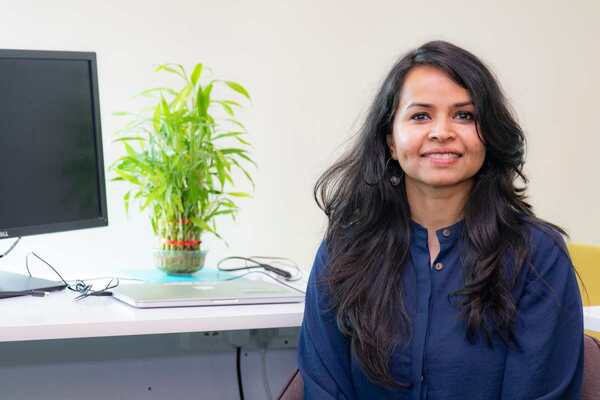
“My journey at Amazon is an example of sheer perseverance and dreaming big,” she says. Her parents instilled the importance of education and ambitions very early on, and they set incredibly strong precedents through their lives by rising amidst social and financial challenges. She says diversity and inclusion are a must-have. “I have built a strong female representation on my team, at 37%. It’s even higher (42%) in leadership roles. In partnership with a female leader on my team, we initiated a quarterly discussion forum promoting inclusion and diversity initiatives on the team,” she says.
Ramya Poosarla is a software development engineer responsible for building India-centric Alexa experiences. “It’s always Day 1 here and I get to influence the overall strategy by helping to define product features, driving the system architecture, and help invent Alexa's future in India in the process,” she says.

Diversity of all forms, she says, brings new perspectives, drives innovation and balanced decisions, all of which are critical for the growth of organisations. “Diversity fights unconscious bias and helps build great innovative products for customers,” she says.
Teena Sidana leads the business development team for Alexa Voice Services in India. She is responsible for integrating the power of Alexa to all third-party brands, which range from audio products like boAt and Motorola to TVs from Kevin and Shinco, and set top boxes from Dish.

“The role gives me the power to influence the strategy of these leading brands,” she says. Covid-19, she notes, has been harsh especially on women who are donning multiple hats at home while also giving their best at work. “Especially in such uncertain times, it is important for organisations to step up and extend support by creating a level playing field for all. Also, we as women should continuously challenge and change the gender paradigm by being equal and not regretting constantly having to multitask, being away from work at odd hours, etc.
Dipa Balakrishnan and Seema Somshekar are focused on creating delightful experiences for users.

Dipa Balakrishnan is senior manager for Alexa experience and engagement.

Seema Somshekar is content program manager.
Balakrishnan joined Amazon in the UK office in 2014 after she got her MBA degree from the London Business School. A key project that she is working on now is to bring Amitabh Bachchan’s voice experience to life on Alexa. “This has all the technical challenges plus the responsibility of getting the experience for an iconic voice and one of India’s best-loved celebrities just right,” she says.
Balakrishnan emphasises that diversity of all forms – gender, language, educational backgrounds, etc – is important to make sure that we are not living in echo chambers, which is a real risk in today’s social media-driven world. “Diversity is important to make sure that decisions are sufficiently stress tested, with a diversity of perspectives and healthy debate. The consequences of a singular perspective can be a very narrow world-view. Diversity is especially important in teams like ours where creativity & innovation are very important,” she says.
Somshekar totally agrees. Diversity, she says, is especially important when you are creating products and experiences for a diverse customer base. “60% of our team comprises women, and we’re also a team of former journalists. This helps us see things through a different lens and enables us to create a much richer product/experience,” she says.
Somshekar joined Amazon in 2017 and was part of the team that launched Alexa in India. “We want to make Alexa relevant and enjoyable to children, as well as their grandparents, irrespective of whether they speak in Hindi or English. We want them to feel like `Alexa gets me’,” she says.
End of Article
FOLLOW US ON SOCIAL MEDIA









Hot Picks
TOP TRENDING
Trending Stories
In Business
Entire Website
- Will banks open only for 5 days a week? Here’s what you should know about IBA’s proposal
- India set to be third largest economy, says S&P Global
- Dalal Street bull run continues! BSE Sensex crosses 69,000 for the first time; Nifty above 20,800
- Byju’s reduces notice period for employees as troubles mount
- Sensex surges over 900 points, Nifty above 20,550 as BJP state election wins bolster Modi's Lok Sabha 2024 prospects
- UltraTech to buy building materials business of Kesoram in 7,600 crore deal
- Tata Technologies stock debuts at a bumper 140% premium; share price at Rs 1200 on BSE
- Tata Technologies share allotment: How to check IPO allotment status, listing date, GMP
- BSE m-cap rides rally in Adani stocks, tops $4 trillion
- Charlie Munger, who helped Warren Buffett build Berkshire, dies at 99
- Tussle in Mahayuti: Total seats 288, but BJP wants 160, Shiv Sena 100+ and NCP 60+
- ACT Hockey: India hammer Malaysia 8-1
- Why is Kolkata rape-murder victim’s mother accusing Mamata of lying?
- 'Openly working against India': BJP slams Rahul over 'anti-national' remarks
- Kolkata rape-murder: Bengal govt invites agitating doctors for talks at 6pm
- When Indian hockey star arranged Banarasi sarees for Pakistani player's sister
- What Apple's latest iPhones with built-in AI mean for us
- iPhone 16 series launched: Complete features, price and how to pre-order
- An Indian, not Columbus, found America, says MP education minister
- Malaika Arora's father Anil Arora dies by suicide



Popular Categories
Hot on the Web
Top Trends
Trending Topics
Deepika PadukoneMalaika Arora Father DeathArbaaz KhanJayram RaviAishwarya Rai BachchanSlat WaterWeight GainGOAT CollectionVikas Sethi DeathMalayalam ProducersIndia's Best Dancer 4Simi GarewalDilli BabuIndian National ParksLaung BenefitsVikas SethiiPhone 16Dubai Princess Sheikha MahraMG Windsor EvWordle Answer
Living and entertainment
Latest News
Manju Warrier expresses gratitude for birthday wishes: "Forever humbled and grateful"Haryana HPSC PGT admit card 2024 out at hpsc.gov.in: Direct link to download hall ticket here6,0,6,6,6 - Smashing Kieron Pollard rolls back the clock in Caribbean Premier League - WatchRelief for Amul in trademark war against Italian brandAfghanistan vs New Zealand: Why is Greater Noida stadium hosting a Test match?Shilpa Shetty and Raj Kundra spotted at the Siddhivinayak Temple; video insideDonald Trump and Kamala Harris shake hands as they meet for first time on debate stage: Watch the 'awkward' momentPrince William’s commitment to a lasting marriage with KateWhen Jaya Bachchan revealed she had a huge crush on Dharmendra, called him a 'Greek God' in front of Hema MaliniJr NTR starrer 'Devara: Part 1' completes censorship formalities; receives UA certificateGeorgia school shooting: Suspect's mom's call wasn't the only alert, multiple warnings overlooked before Apalachee high attack'Trump should not be telling a woman what to do with her body', says Kamala Harris on abortion rights during US presidential debateArbaaz Khan spotted outside Malaika Arora's house along with police after the tragic news of her father's demise by alleged suicide - WATCH VIDEOShivaji statue collapse: Sculptor’s custody extended till September 13Vijay Sethupathi and Trisha starrer '96' to have a sequel, reveals Prem Kumar7 Common veggies that are loaded with iron and essential nutrientsAir India Express and Scoot launch exciting flight sale for domestic and international travelBengaluru techie pockets 1k cryptocurrencies of his company, lands in police net
Copyright © 2024 Bennett, Coleman & Co. Ltd. All rights reserved. For reprint rights: Times Syndication Service