
- News
- Business News
- India Business News
- Tata invests in Grameen Capital
Trending
This story is from March 25, 2015
Tata invests in Grameen Capital
Ratan Tata, chairman emeritus of Tata Sons, the holding company of the more than $100-billion Tata Group, has invested in a debt vehicle of micro financial advisory firm Grameen Capital.

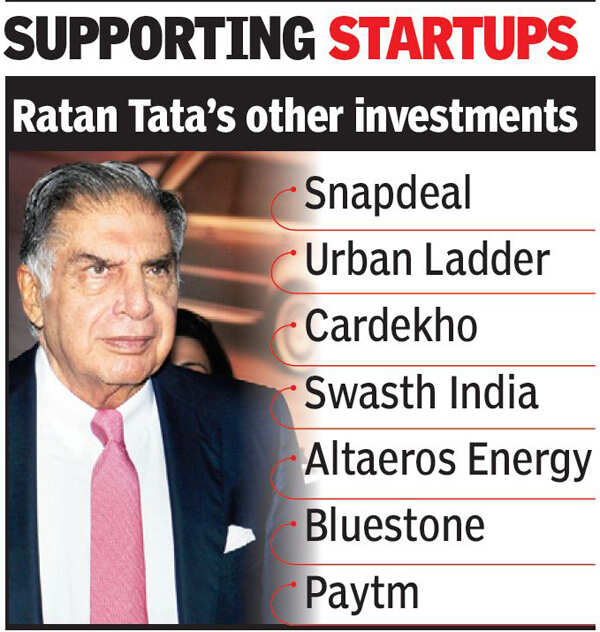
Tata, who recently invested in Swasth, a healthcare service provider to low-income group, has been building a portfolio of investments in the social impact and e-commerce sectors.
The septuagenarian’s previous consumer internet investments include Snapdeal, Paytm, Urban Ladder, Bluestone and CarDekho.
Besides Tata, Shrinivas Dempo of Goa-based Dempo Group and former investment banker Vikram Gandhi have invested in Grameen Capital’s debt vehicle, which has an initial fund-raise target of $10 million. Grameen Capital did not give the financial details of the transaction.
Tata, Dempo and Gandhi join other investors, including Patni brothers — Amit and Arihant — and Grameen Foundation, who have invested in the debt vehicle. Grameen Capital, led by Royston Braganza, has facilitated over $160 million of debt and equity capital for social enterprises, according to a company statement.
The non-banking finance company, which focuses on agriculture, affordable health and affordable education, is also in advanced discussions with two institutional investors to raise additional equity capital for the debt vehicle, the statement added. Grameen Capital expects to commence lending from the new vehicle in the next quarter.
“Our debt vehicle is a critical part of our capital-with-a-conscience ecosystem strategy,” said Braganza. “Traditional sources of debt, in many cases, are neither adequate, affordable nor timely, hence forcing social enterprises to end up using equity for working capital. We hope that our debt vehicle will help, in some modest manner, attract attention and debt capital to the base of the pyramid.”
According to industry estimates, there is a $200-billion gap in debt capital available to micro, small and medium enterprises in the country.

About the Author
Reeba ZachariahEnd of Article
FOLLOW US ON SOCIAL MEDIA










Photostories
Hot Picks
TOP TRENDING
Trending Stories
In Business
Entire Website
- Will banks open only for 5 days a week? Here’s what you should know about IBA’s proposal
- India set to be third largest economy, says S&P Global
- Dalal Street bull run continues! BSE Sensex crosses 69,000 for the first time; Nifty above 20,800
- Byju’s reduces notice period for employees as troubles mount
- Sensex surges over 900 points, Nifty above 20,550 as BJP state election wins bolster Modi's Lok Sabha 2024 prospects
- UltraTech to buy building materials business of Kesoram in 7,600 crore deal
- Tata Technologies stock debuts at a bumper 140% premium; share price at Rs 1200 on BSE
- Tata Technologies share allotment: How to check IPO allotment status, listing date, GMP
- BSE m-cap rides rally in Adani stocks, tops $4 trillion
- Charlie Munger, who helped Warren Buffett build Berkshire, dies at 99
- 'If Rahul...': BJP claims INDIA bloc may make LoP post rotational
- Chennai train collision: 12-13 coaches derailed; injured taken to hospitals
- When Tata explained why Nano failed and readers offered help
- CCS 'approves launch of 52 spy sats for Rs 27k crore to boost space surveillance
- Rupee breaches 84 as oil prices, foreign outflows put strain
- PM Modi has a ‘curious astral energy’, Boris Johnson says in memoir
- Can Modi repeat the Haryana poll magic in Maharashtra as well?
- Zerodha co-founder Nikhil Kamath: They can make us shut down ...
- Industrial output contracts for 1st time in nearly 2 years
- RTI completes 19 years; appeals, complaints backlog crosses 4 lakh mark


Popular Categories
Hot on the Web
Top Trends
Shantanu NaiduRussell WilsonsTom BradyAUS vs PAK Live ScorePakistan Cricket FanSuryakumar YadavNobel Peace PrizeMahadev Betting AppNew UPI Transaction LimitRatan Tata DiesPM ModiUGC NET Result 2024Management Colleges of IndiaTop Medical Colleges of IndiaTop Engineering Colleges of IndiaTop Pharmacy Colleges of IndiaLive Cricket Score
Trending Topics
Diwali WishesJigra ReviewDussehra WishesVettaiyan OTT ReleaseVettaiyan CollectionVettaiyan ReviewBlack Movie ReviewDevara CollectionBigg Boss 18Deepika PadukoneShraddha KapoorRatan Tata Passed AwayJigra Movie ReviewVettaiyan Movie ReviewSwatantrya Veer SavarkarDussehra 2024Elon MuskKing Legacy CodesUltimate Football Codes October 2024Wordle Answer
Living and entertainment
Latest News
Navratri 2024: Jaya Bachchan and Shweta Bachchan join Rani Mukerji at the Durga puja pandalOff Argentina's Patagonian coast, whales and their calves dive deep for foodApplications for new power connections among services moved exclusively onlineSara Arfeen Khan opens up about converting to Islam; says, 'I read all holy books and attended a lot of religious debates before converting'Amitabh Bachchan, Rambha, Khushboo and others check in on Govinda after gun misfire incident - ExclusiveCops on unusual hunt: For denturesHappy Dussehra 2024: Top 50 Wishes, Messages, Images and Quotes to Share with Your Loved OnesFortified-food plan faces questions from two PM panel membersHyderabad company hit bullseyeKrushna Abhishek shares a heartwarming post for mama Govinda; says 'jab body mein adha blood supremely talented actor Govinda ka ho...'Could Tyreek Hill Return to the Chiefs? Cryptic Posts Fuel Trade SpeculationWatch: Elon Musk's new robot serves drinks, poses for the cameras'All is well': Ajit Pawar calls claims of rift in Mahayuti 'baseless'With special access card, disabled people can skip Exposition queuesForex reserves drop $3.7 billion in week, most since start of August'Jigra' box office collection day 1 early estimate: The Alia Bhatt starrer faces tough competition with Rajinikanth's starrer 'Vettitan' and Rajkummar Rao's Vicky Vidya Ka Woh Wala Video'Robert Gronkowski Reacts to His Hilarious Impression in FX's American Sports Story: Aaron HernandezIf Rahul Gandhi fails to deliver, INDIA bloc may make LoP post rotational: BJP
Copyright © 2024 Bennett, Coleman & Co. Ltd. All rights reserved. For reprint rights: Times Syndication Service