
- News
- Business News
- India Business News
- 'Few exemptions, flat & low rates will be ideal income tax regime'
Trending
This story is from February 3, 2022
'Few exemptions, flat & low rates will be ideal income tax regime'
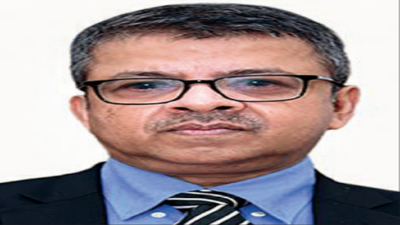
This has been a good year in terms of tax collection. How do you look at next year's target?
The revised target is Rs 12.15 lakh crore, which marks the first time that we will cross the Rs 12 lakh crore mark and we will meet that.
It is remarkable since it comes on the back of a pandemic. This year has built a solid base and we have to start anew. We need to avoid the yo-yos in collections because that's the basis for government's expenditure. We have a plan to meet next year's target with consistency as the mantra. We will use the same instruments while also helping taxpayers. We need to understand the pulse of the people as someone may have inadvertently missed some income. Now the doors are open, and we don't run after them.
What about someone who may not have not disclosed his income, can a defaulter also avail of the benefit?
There are some no-go areas, such as cases which have been taken up for scrutiny and a notice has been issued, or when a case has been finalised, or if there has been a search, you can't file a revised return. No one will be allowed to game the system by significantly reporting higher losses to claim a refund. If an intrusive or non-intrusive action has taken place, then it is not allowed. These are reasonable limitations but those who have genuinely omitted to file a return, they are welcome.
What is the strategy to expand the base?
We have a data collecting machinery and there are several areas where TDS comes. It is not a source of revenue but to get a person's financial profile. We have enlarged the Annual Information Statement to include remittance abroad and other numbers. We have also built the e-verification scheme and share the data with the directorate concerned. Once the data is verified, we confront the entity and ask for the income source. It may be taking two years to get the information and assessment by the officer. You have two years to correct that.
How many individuals have moved to new tax regime?
We are still looking at the returns. Over 60% income of the companies has moved to the tax regime, around 16% of the 9.2 lakh companies have shifted. We want to move to a simpler regime, with no exemptions or deductions -- a flat rate, simple rate, low rate. There will be less of a bother for us to judge if you are entitled, not entitled. There is a temptation for taxpayers to wrongly use it at times.
There is a tax on virtual digital currency from next financial year. Does this leave some arbitrage opportunity during these few weeks?
Transactions before April 1 are not tax exempt. From 2017, I-T has been working on this and has done surveys and searches and we have a working knowledge. These have been declared as taxable either as income from business, other sources or as capital gains. There has never been a suggestion from the taxpayer that this is not taxable. So, we are not introducing a concept that it was tax free. It continues to be taxable even now.
Will this be a dilution of the fight against black money?
We have been fighting to bring transparency in our tax system. Crypto has brought in a lot of opacity. Our proposals will bring a lot of clarity on who is doing what - whether income invested is from legitimate sources or not.
Can virtual digital assets be a tool to park or transfer black money?
It can be used or misused in ways which may be inconceivable at the moment. Suppose, export proceeds are received in crypto, or services are being paid for in crypto, where does it leave the economy because it will be a wallet-to-wallet transaction without going through the banking channel. This needs to be understood and it's timely for the government to allow us to enter this area.
End of Article
FOLLOW US ON SOCIAL MEDIA










Photostories

Hot Picks
TOP TRENDING
Trending Stories
In Business
Entire Website
- Will banks open only for 5 days a week? Here’s what you should know about IBA’s proposal
- India set to be third largest economy, says S&P Global
- Dalal Street bull run continues! BSE Sensex crosses 69,000 for the first time; Nifty above 20,800
- Byju’s reduces notice period for employees as troubles mount
- Sensex surges over 900 points, Nifty above 20,550 as BJP state election wins bolster Modi's Lok Sabha 2024 prospects
- UltraTech to buy building materials business of Kesoram in 7,600 crore deal
- Tata Technologies stock debuts at a bumper 140% premium; share price at Rs 1200 on BSE
- Tata Technologies share allotment: How to check IPO allotment status, listing date, GMP
- BSE m-cap rides rally in Adani stocks, tops $4 trillion
- Charlie Munger, who helped Warren Buffett build Berkshire, dies at 99
- Boost for Akhilesh as SP to get 2 front row seats in Lok Sabha, Congress 4
- 'Mann ki Baat' completes 10 years: Top quotes from PM Modi's address
- Will Indian worker’s death change the way how Italy treats migrants?
- Delhi Police constable crushed to death by 'liquor supplier'
- 15 killed in fresh Israeli strikes in Lebanon a day after Hezbollah chief's death
- 2nd Test Live: Next inspection at 2 PM; match delayed due to wet outfield
- Will latest $7bn IMF package really be Pakistan's last bailout?
- Gurugram Police files case against WhatsApp directors and nodal officers: Here’s why
- Sweets, poison & threads: Cops try to connect dots in Delhi Rangpuri deaths
- Harvard and anti-Indian bias: Why Ivy leagues have an Asian-American problem


Popular Categories
Hot on the Web
Top Trends
Trending Topics
Devara CollectionNavya Naveli NandaPawan KalyanJungle SafariStree 2 OTT ReleaseRose GardenDevara CollectionOTT Release MovieMasala OmeletteEmergencyDevaraTaaza Khabar 2 Twitter ReviewDevara Movie ReviewHealthy RaitasSwatantrya Veer SavarkarColdplay India tour 2025Smartphone DealsApple Macbook Air M1Amazon SaleWordle Answer
Living and entertainment
Latest News
India vs Australia: Can Akash Deep make the difference Down Under?Historic North Carolina village submerged under water after Hurricane Helene brings heavy rainIndia shooter reports late for final, misses potential medal at Junior World ChampionshipsExclusive - A sneak peek into Zain Imam aka Teerth’s makeup room on the set of Suman IndoriThree killed, four injured after bus collides with truck in Bihar's KaimurSivakarthikeyan imitates Kamal Haasan at the 'Amaran' promotional event, gets praisesWhen Shah Rukh Khan, Aamir Khan, grooved with Dharmendra at the 'Yamla Pagla Deewana 2' eventTulsi Gabbard calls Kamala Harris shameless as VP inspects US-Mexico border: 'No conscience'‘Devara’ stars Jr. NTR and Saif Ali Khan try their hand at Punjabi and BhojpuriAir Canada fined for breaching restricted Iraqi airspaceStress could be your heart's worst enemyI Say ‘Khamosh’ to Sonakshi: Zaheer Iqbal - ExclusiveSC handbook lists terms to be avoided to refer to persons with disabilities, provides alternativesEx-WWE Writer Vince Russo Voices Frustration Over Triple H's Handling of LA KnightQueen Camilla does not want King Charles to meet Prince Harry because...Judge ‘warns’ Apple: Your Homework deadline is Monday, September 30, no matter whatMapusa rain surges past 4,000mm markAnanya Panday calls new mom Deepika Padukone 'the most beautiful woman ever'
Copyright © 2024 Bennett, Coleman & Co. Ltd. All rights reserved. For reprint rights: Times Syndication Service