
- News
- Business News
- India Business News
- India Business News
- Crop shift: Oilseeds lose ground; government fears maize boom may hit cooking oil self-reliance
Trending
Crop shift: Oilseeds lose ground; government fears maize boom may hit cooking oil self-reliance
Indian farmers are increasingly switching to maize cultivation due to better market prices driven by ethanol production, raising concerns about India's dependence on edible oil imports. Despite government efforts to boost oilseed production, lower returns from crops like soyabean are prompting this shift.
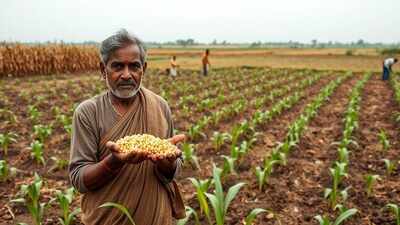
This is an AI-generated image, used for representational purposes only.
Stay informed with the latest business news, updates on bank holidays and public holidays.
AI Masterclass for Students. Upskill Young Ones Today!– Join Now

About the Author
TOI Business DeskEnd of Article
Follow Us On Social Media










Hot Picks
Top Trending
Tired of too many ads?go ad free now
Trending Stories
In Business
Entire Website
- Stock market rally under threat! Rs 1 lakh crore shares dumped by promoters, private equity firms & strategic investors; what’s happening
- Crude oil price to slump? Prices set for biggest weekly drop since March 2023; supply risk premium from Israel-Iran conflict fades
- India-US trade talks: GTRI warns against one-sided deal
- After suspending Indus Waters Treaty with Pakistan, India now eyes changing Ganges Water Sharing Treaty with Bangladesh
- US-China trade deal: After Donald Trump, China says details of deal ‘confirmed’; adds America to 'cancel series of restrictive measures’
- Digital safety: DoT proposes stricter cybersecurity rules
- ‘Like H-1B without a lottery’: What is O-1 visa? New route to US becomes popular among Indians; check details
- YU7 debut frenzy: Xiaomi's newly launched SUV receives nearly 300k orders in an hour
- Big corporate deal:JSW Paints to acquire Akzo Nobel India; Rs 12,915-cr deal to make it 4th largest player
- Gold price prediction today: What's the gold rate outlook for June 27, 2025; does a 'sell on rise' strategy makes sense?
- Rath Yatra scare in Ahmedabad: Elephant runs amok near Khadia, tranquilised and isolated; 17 others continue on route
- SSC MTS, Havaldar 2025 registration starts at ssc.gov.in: Direct link to apply for over 1000 vacancies, and other key details here
- Maharashtra FYCJ first merit list 2025 to be released on this date: Check complete details here
- TS PGECET results 2025 declared at pgecet.tgche.ac.in: Direct link to download rank cards here
- “I can’t afford to pay”: Dwyane Wade’s wife Gabrielle Union opens up about financial pressures despite the NBA legend’s massive net worth
- Zohran Mamdani: Congress's Abhishek Singhvi slams Indian-origin NYC mayoral candidate; says when he speaks, 'Pakistan PR takes day off'
- Why Huawei's new laptop is being regarded as evidence of how America's 'China ban' is hurting one of the biggest Chinese company
- Noshir Gowadia: India-born engineer developed propulsion system of B-2 bombers; later jailed for helping China build cruise missile
- 'Picture of pure innocence': Baby elephant stops for a quick snack on road; heartwarming moment goes viral
- Dubai: 21 convicted and fined Dh25.2 million in one of the biggest residency visa fraud schemes
Financial calculators






Tired of too many ads?go ad free now
Explore Every Corner
Across The Globe
NBA Trade RumorsTakahiro ShiraishiZohran MamdaniWhat is Pandoras LunchboxFortnite OGH1B VisaKilmer Abrego GarciaShubhanshu ShuklaTyler WallBank HolidaysMemphis GrizzliesPatrick MahomesRussell Wilson WifeJagannath Rath Yatra 2025Omead AfsharThe RockShubhanshu ShuklaJustin TuckerCM FadnavisGisele BundchenBrittany MahomesTaylor SwiftTravis Kelce Favorite Taylor Swift SongStremer EthosRath Yatra AhmedabadDwyane Wades WifeTravis Kelce and Patrick Luxury SteakhouseZul Qarnain Kwane NantambuTom BradyO-1 visa
Hot on the Web
Kannappa Movie ReviewJagannath Rath Yatra WishesMaa Movie ReviewMike FremontPriya Sachdev KapurPanchayat Actors FeesLiver HealthBlood PressureAdnan SamiHeart HealthMaa Movie ReviewPanchayat 4 ReviewHair GrowthSonakshi SinhaCoffee BenefitsIbrahim QadriMahesh AnandKannappa ReviewF1 Movie Twitter ReviewVishnu ManchuParrot TypesKuberaa Box Office CollectionSanvikaaWorld Largest SnakesSquid Game Season 3Sitaare Zameen Par Box Office CollectionUNESCO World Heritage SitesHeart Health ExerciseLeopard Sighting PlacesRam KapoorHigh Blood SugarBest Romantic AnimeBelly FatBlack Mamba FightCancer ResearchSimpson PredictionBad Breath CausesMicrosoft Sued By AuthorsBumble LayoffsGauranga DasCastor Oil BenefitsGeneral Motors Recalls
Trending Topics
TS PGECET ResultMaharashtra FYCJ Merit ListBest Education System CountriesCBSE New Exam PatternTNEA Rank ListShikhar DhawanWI vs AUS Test MatchJasprit BumrahMichael ClarkeAjinkya RahaneAcres to Square FeetRicky PontingRohit SharmaHarbhajan SinghIND vs ENG Live StreamingJobs Disappearing in 2025ICC New RulesAhmedabad Jagannath YatraPuri Jagannath Yatra 2025Jaggu BhagwanpuriaBengaluru Airport NewsKolkata RapeF35 Fighter JetJammu Terrorist KilledGurgaon Hit And RunMumbai Train DeathsNoida FireFaridabad Bridge CollapseJammu FloodsHimachal Pradesh SuicideAccenture RevenueSundar PichaiNYT Connections HintsWordle Today HintsElon MuskBill Gates DaughterBest Romantic AnimeRogers Mobile Network OutageWalmart CeoWorld Most Expensive WeddingsDwyane Wade Car CollectionSania Mirza
Popular Categories
HeadlinesSports NewsBusiness NewsIndia NewsWorld NewsBollywood NewsHealth+ TipsIndian TV ShowsTechnologyTravelEtimesHealth & FitnessNFLIntel The Learning CurveIndia vs EnglandAstrologyWeather TodayPlatinum Rate TodaySilver Rate TodayGold Rate TodayDelhi AQI TodayJune Bank HolidaysPublic Holidays in JuneStock Market HolidaysNSE HolidaysBSE HolidaysTechnology NewsInternational SportsPublic HolidaysBank Holidays
Latest News
Khuti puja at Mohammad Ali Park marks the onset of Durga Puja festivities7 habits that destroy a child’s confidenceOptical illusion personality test: Lips or eye? What you spot first tells if you're confident or insecure in your love lifeIga Świątek and Victoria Azarenka caught in feud as ‘awkward’ handshake breaks the internetFeeling sick while traveling? Here’s what causes motion sickness and how to prevent itFriendship through film: Screening marks India’s role in Korean warStock market rally under threat! Rs 1 lakh crore shares dumped by promoters, private equity firms & strategic investors; what’s happeningFrom stop clock to boundary catches: ICC makes multiple big changes to cricket rulesTied up, locked in basements, many without clothes: 42 elderly rescued from 'illegal' Noida old-age home; were living in 'deplorable' conditions'The Prada paradox': Maharashtra artisans meet CM Fadnavis over 'Kolhapuri chappals' at fashion show; raise GI violation issueWhy more Indians are ditching costly medicines — and trusting genericsWatch: Viral video shows an elephant going rogue during the Jagannath yatra in AhmedabadAnshuman Jha takes over as director for Lakadbaggha 2 – The Monkey BusinessTech analyst Dan Ives: ‘Microsoft is clearly leading when it comes to.…’Exclusive! Makers considering Ammy Virk to replace Diljit Dosanjh in Border 2?These 5 jobs are vanishing silently, warns WEF report: Is yours next?'Tea by the sea': West Bengal CM Mamata Banerjee's photo with monkey goes viral - see picsIndustrial profits dip again: China sees sharp fall in May; Donald Trump's tariffs, price wars add pressure
Copyright © 2025 Bennett, Coleman & Co. Ltd. All rights reserved. For reprint rights: Times Syndication Service