
- News
- Business News
- India Business News
- Budget 2018: Revenue squeeze may put corporate tax cuts on hold
Trending
This story is from January 30, 2018
Budget 2018: Revenue squeeze may put corporate tax cuts on hold
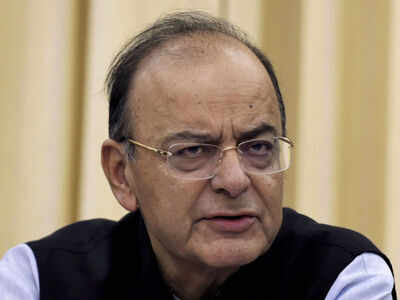
Businesses are expecting Finance Minister Arun Jaitley to cut corporate tax by 25% for all companies
Key Highlights
- Modi government is facing a revenue squeeze that may make it difficult to deliver on a promise to lower the basic corporate tax rate over time
- Tax competition across world is heating up with US, China Japan, France following suit
- Businesses are expecting Finance Minister Arun Jaitley to cut corporate tax by 25% for all companies
NEW DELHI: Businesses waiting for PM Modi to follow through on a pledge to cut corporate taxes may need to wait a bit longer.
In his last full budget before 2019 elections, Modi is facing a revenue squeeze that may make it difficult to deliver on a promise to lower the basic corporate tax rate over time to 25 per cent from 30 per cent. It’s a catch-22 situation for the premier, who is also trying to lure foreign investors at a time when the US, UK and other countries are lowering business taxes.
Budget 2018: Complete coverage
Here’s a look at Modi’s challenge ahead of the government’s budget on Thursday.
Modi pledged in 2015 to bring down corporate taxes over four years, but businesses are still waiting for a roadmap on how that will happen. It’s part of his mission to improve India’s investment climate: he is also reducing red-tape, spurring the liquidation of assets to speed-up the recovery of bad loans, and introduced GST last year to cut down business costs. India is ranked 119 out of 190 countries when it comes to ease of paying taxes, according to the World Bank’s Doing Business index.
While those reforms have helped India win a credit rating upgrade and record foreign direct inflows last year, Modi needs to keep investment going to help support an economy that’s set to expand at its slowest pace in four years.
Tax competition around the world is heating up. The US lowered corporate taxes by 14 percentage points to 21 per cent, with companies like Apple, Walmart Stores and JPMorgan Chase announcing plans to raise investment, hiring or wages.
“The US has made corporate tax rates competitive and India needs to respond,” said Jayesh Sanghvi, a tax partner at EY in Hyderabad. If it doesn’t, companies will examine arbitrage opportunities given the 10-15 percentage point difference, he said.
After reducing the rate last year to 25 per cent for small companies with a turnover of up to Rs 50 crore, businesses are expecting Finance Minister Arun Jaitley to move again this week. Half of the 120 professionals surveyed by Deloitte expect the rate to be cut to 25 per cent for all companies. Rakesh Nangia, head of tax advisory firm Nangia & Co., warned of a “flight of capital” if tax rates aren’t reduced.
Can India afford it?
Modi is in a fiscal bind. Revenue collection remains under pressure following the disruptive roll-out of GST, and with an eye on next year’s election, his spending priorities may turn to the distressed rural sector, putting pressure on the budget deficit.
The government signaled on Monday it may slow the pace of fiscal consolidation after pledging to narrow the budget gap to 3 per cent of gross domestic product in the year beginning April 1 from an estimated 3.2 per cent this year. Chief Economic Adviser Arvind Subramanian told lawmakers that setting “overly ambitious targets” may undermine the credibility of fiscal policy.
Abhishek Gupta, a Mumbai-based analyst with Bloomberg Economics, expects the budget deficit to come in at 3.4 per cent of GDP this year. The median estimate in a Bloomberg survey of 18 economists is for 3.5 per cent this year and 3.2 per cent next year.
Political considerations may also prevent Modi from reducing corporate taxes now, said Shailesh Kumar, a senior analyst at Eurasia Group in Washington.
“In addition to concerns that a reduction will further widen the deficit, a move by Modi to cut corporate rates ahead of next year’s election would expose him to opposition criticism that he is a crony capitalist who only wants to help friends in the business sector,” he said.
What are others doing?
Japan has begun phasing in a cut in corporate taxes to get companies to spend their cash on boosting wages and investment. Hungary is bringing the rate down to 9 per cent, France plans to lower it to 25 per cent by 2022, and the UK is aiming for 17 per cent by 2020.
China will offer a tax exemption to foreign investors if they re-invest their dividends in projects encouraged by the government.
Aside from the corporate tax cut, the US government is also discouraging offshore payment for services in a move that may hurt India’s pharmaceutical, research and development and software companies.
“US multinationals operating in India would want to look at the profits they are leaving here,” said Rajesh H. Gandhi, a partner at Deloitte India. “Similarly, Indian multinationals operating in the US could be encouraged to increase the depth of their US operations and allocate more profits at the US level.”
In his last full budget before 2019 elections, Modi is facing a revenue squeeze that may make it difficult to deliver on a promise to lower the basic corporate tax rate over time to 25 per cent from 30 per cent. It’s a catch-22 situation for the premier, who is also trying to lure foreign investors at a time when the US, UK and other countries are lowering business taxes.
Budget 2018: Complete coverage
Here’s a look at Modi’s challenge ahead of the government’s budget on Thursday.
Why Cut?
Modi pledged in 2015 to bring down corporate taxes over four years, but businesses are still waiting for a roadmap on how that will happen. It’s part of his mission to improve India’s investment climate: he is also reducing red-tape, spurring the liquidation of assets to speed-up the recovery of bad loans, and introduced GST last year to cut down business costs. India is ranked 119 out of 190 countries when it comes to ease of paying taxes, according to the World Bank’s Doing Business index.
While those reforms have helped India win a credit rating upgrade and record foreign direct inflows last year, Modi needs to keep investment going to help support an economy that’s set to expand at its slowest pace in four years.
Tax competition around the world is heating up. The US lowered corporate taxes by 14 percentage points to 21 per cent, with companies like Apple, Walmart Stores and JPMorgan Chase announcing plans to raise investment, hiring or wages.
“The US has made corporate tax rates competitive and India needs to respond,” said Jayesh Sanghvi, a tax partner at EY in Hyderabad. If it doesn’t, companies will examine arbitrage opportunities given the 10-15 percentage point difference, he said.
After reducing the rate last year to 25 per cent for small companies with a turnover of up to Rs 50 crore, businesses are expecting Finance Minister Arun Jaitley to move again this week. Half of the 120 professionals surveyed by Deloitte expect the rate to be cut to 25 per cent for all companies. Rakesh Nangia, head of tax advisory firm Nangia & Co., warned of a “flight of capital” if tax rates aren’t reduced.
Can India afford it?
Modi is in a fiscal bind. Revenue collection remains under pressure following the disruptive roll-out of GST, and with an eye on next year’s election, his spending priorities may turn to the distressed rural sector, putting pressure on the budget deficit.
The government signaled on Monday it may slow the pace of fiscal consolidation after pledging to narrow the budget gap to 3 per cent of gross domestic product in the year beginning April 1 from an estimated 3.2 per cent this year. Chief Economic Adviser Arvind Subramanian told lawmakers that setting “overly ambitious targets” may undermine the credibility of fiscal policy.
Abhishek Gupta, a Mumbai-based analyst with Bloomberg Economics, expects the budget deficit to come in at 3.4 per cent of GDP this year. The median estimate in a Bloomberg survey of 18 economists is for 3.5 per cent this year and 3.2 per cent next year.
Political considerations may also prevent Modi from reducing corporate taxes now, said Shailesh Kumar, a senior analyst at Eurasia Group in Washington.
“In addition to concerns that a reduction will further widen the deficit, a move by Modi to cut corporate rates ahead of next year’s election would expose him to opposition criticism that he is a crony capitalist who only wants to help friends in the business sector,” he said.
What are others doing?
Japan has begun phasing in a cut in corporate taxes to get companies to spend their cash on boosting wages and investment. Hungary is bringing the rate down to 9 per cent, France plans to lower it to 25 per cent by 2022, and the UK is aiming for 17 per cent by 2020.
China will offer a tax exemption to foreign investors if they re-invest their dividends in projects encouraged by the government.
Aside from the corporate tax cut, the US government is also discouraging offshore payment for services in a move that may hurt India’s pharmaceutical, research and development and software companies.
“US multinationals operating in India would want to look at the profits they are leaving here,” said Rajesh H. Gandhi, a partner at Deloitte India. “Similarly, Indian multinationals operating in the US could be encouraged to increase the depth of their US operations and allocate more profits at the US level.”
End of Article
FOLLOW US ON SOCIAL MEDIA










Hot Picks
TOP TRENDING
Trending Stories
In Business
Entire Website
- Will banks open only for 5 days a week? Here’s what you should know about IBA’s proposal
- India set to be third largest economy, says S&P Global
- Dalal Street bull run continues! BSE Sensex crosses 69,000 for the first time; Nifty above 20,800
- Byju’s reduces notice period for employees as troubles mount
- Sensex surges over 900 points, Nifty above 20,550 as BJP state election wins bolster Modi's Lok Sabha 2024 prospects
- UltraTech to buy building materials business of Kesoram in 7,600 crore deal
- Tata Technologies stock debuts at a bumper 140% premium; share price at Rs 1200 on BSE
- Tata Technologies share allotment: How to check IPO allotment status, listing date, GMP
- BSE m-cap rides rally in Adani stocks, tops $4 trillion
- Charlie Munger, who helped Warren Buffett build Berkshire, dies at 99
- 200 deaths/day, $1.5tn per year: How China is destroying US with fentanyl
- Harris emerges unscathed from debate, dancing around her flip-flops
- iPhone success shows India can beat China to become world's factory
- Communal violence erupts in Karnataka during Ganesha idol immersion
- After Kolkata docs set new demands, Mamata govt says 'not ready to accept'
- Omar fighting for chair, I’m fighting for people of Kashmir: Er Rashid
- Why Kolkata rape-murder victim’s mother accusing Mamata of lying?
- Apple iPhone 16 vs iPhone 15: Which iPhone to buy and why
- Biryani row: Administration moves boy to new school, to waive Rs 37k in fees
- 2013 Patna serial blasts: HC cuts death to 30 years in jail for 4



Popular Categories
Hot on the Web
Top Trends
Trending Topics
Deepika PadukoneMalaika Arora Father DeathArbaaz KhanJayram RaviAishwarya Rai BachchanSlat WaterWeight GainGOAT CollectionVikas Sethi DeathMalayalam ProducersIndia's Best Dancer 4Simi GarewalDilli BabuIndian National ParksLaung BenefitsVikas SethiiPhone 16Dubai Princess Sheikha MahraMG Windsor EvWordle Answer
Living and entertainment
Latest News
Jiiva and wife escape with minor injuries after a road accidentThe Zodiac Signs Most Naturally Inclined to HealingWhy Banyan trees survive for centuries and spread indefinitely?Telangana government pushes for increased flood relief from CentreWalking dog in Goa? Mouth guard, leash soon to be mustNBA 2K25 locker codes September 2024: Locker codes revealed and know how to reveal themDonald Trump and Kamala Harris shake hands as they meet for first time on debate stage: Watch the 'awkward' momentBRS pushes for disqualification of turncoat MLAs after High Court rulingKamala may have won debate. But election is still too close to callCommunal violence erupts in Karnataka during Ganpati Visarjan, section 144 imposedVarun Dhawan shares unfiltered reaction to Janhvi Kapoor's 'Daavudi' song from 'Devara: Part 1': 'So freaking good...''On basis of fairness and equality': Bangladesh seeks good relations with India, says YunusMpox kills two, six other confirmed cases in Cameroon: GovernmentJalen Ramsey demands action against Miami Police following Tyreek Hill's pulled from car49ers RB Christian McCaffrey misses win over JetsWWE Superstar Blames the Company for Failing to Utilize Omos’ PotentialVijay Sethupathi and Trisha starrer '96' to have a sequel, reveals Prem Kumar7 Common veggies that are loaded with iron and essential nutrients
Copyright © 2024 Bennett, Coleman & Co. Ltd. All rights reserved. For reprint rights: Times Syndication Service