
- News
- Business News
- India Business News
- Adani-Hindenburg row: Supreme Court says no ground to transfer probe from Sebi to SIT or CBI
Trending
This story is from January 3, 2024
Adani-Hindenburg row: Supreme Court says no ground to transfer probe from Sebi to SIT or CBI
In a significant development, the Supreme Court has declined a request for an SIT or CBI inquiry into the Adani-Hindenburg controversy. This controversy had previously led to a dramatic meltdown in the share prices of Adani group companies. The apex court said that there was no substantial basis to question the fairness of the ongoing probe by the Securities and Exchange Board of India (SEBI), which has already completed investigations in 22 out of 24 cases.
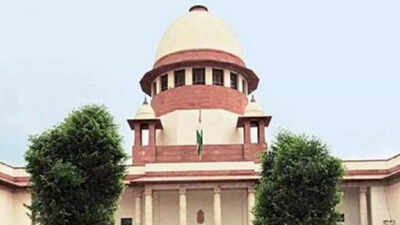
The bench, led by Chief Justice D Y Chandrachud, emphasized the competence of SEBI in handling the matter. The court has directed SEBI to expedite and conclude its investigation within three months regarding the remaining two cases. These cases involve allegations of violation of SEBI rules and regulations by Adani group companies, specifically concerning the manipulation of share prices.
In its ruling, the Supreme Court also addressed the reports linked to George Soros and the OCCRP (Organized Crime and Corruption Reporting Project) about alleged stock manipulations by the Adani group, as well as the Hindenburg report. The bench noted that these reports could not be independently verified and thus, should not be considered as authentic sources of information for legal proceedings.
This decision comes as a relief to the Adani group, which has been under intense scrutiny following the Hindenburg Research report that accused the conglomerate of stock manipulation and accounting fraud. The controversy had a significant impact on the Indian stock market, leading to a sharp decline in the share values of Adani group companies.
Allegations were made in a report by short-seller Hindenberg Research that Adani had inflated its share prices. After these allegations were published, it led to a sharp fall in the share value of various Adani companies, reportedly to the tune of $100 billion. The Adani Group has dismissed the charges as lies, saying it complies with all laws and disclosure requirements.
Various petitions were filed alleging that changes to the Securities and Exchange Board of India Act (SEBI Act) had provided a shield and an excuse for the Adani Group's regulatory contraventions and market manipulations to remain undetected.
The apex court then asked SEBI to independently probe the matter and also constituted an expert committee headed by retired Supreme Court judge Justice AM Sapre to look into the matter.
In May last year, the expert committee in its report had found no prima facie lapse on the part of the SEBI in the matter.
The bench had said that it has no reason to "discredit" the Securities and Exchange Board of India (SEBI), which probed allegations against the Adani group, as there was no material before it to doubt what the market regulator had done. It said the court does not have to treat what was set out in the Hindenburg report as a "true state of affairs".
It had asked SEBI as to what it intends to do in the future to ensure investors don't lose wealth due to volatility in stock market or short-selling.
"We don't have to treat what is set out in the Hindenburg report as ipso facto (automatically) a true state of affairs. That is why we directed the SEBI to investigate. Because for us to accept something which is in the report of an entity, which in not before us and whose veracity we have no means of testing, would really be unfair," the bench had said.
Senior lawyer Prashant Bhushan had argued that SEBI's role in the matter was "suspect" for several reasons because a lot of information was available to the regulator way back in 2014.
SG Tushar Mehta, appearing for the SEBI, had told the bench that there was "a growing tendency of planting stories outside India to influence things and policies inside India".
Mehta had said that investigation in 22 out of the 24 cases relating to allegations against the Adani group were over.
The Adani Group stocks got bludgeoned on the bourses after the Hindenburg Research made a litany of allegations, including those about fraudulent transactions and share-price manipulation, against the business conglomerate.
The Adani Group dismissed the charges as lies, saying it complies with all laws and disclosure requirements.

About the Author
TOI News DeskEnd of Article
FOLLOW US ON SOCIAL MEDIA










Photostories

Hot Picks
TOP TRENDING
Trending Stories
In Business
Entire Website
- Will banks open only for 5 days a week? Here’s what you should know about IBA’s proposal
- India set to be third largest economy, says S&P Global
- Dalal Street bull run continues! BSE Sensex crosses 69,000 for the first time; Nifty above 20,800
- Byju’s reduces notice period for employees as troubles mount
- Sensex surges over 900 points, Nifty above 20,550 as BJP state election wins bolster Modi's Lok Sabha 2024 prospects
- UltraTech to buy building materials business of Kesoram in 7,600 crore deal
- Tata Technologies stock debuts at a bumper 140% premium; share price at Rs 1200 on BSE
- Tata Technologies share allotment: How to check IPO allotment status, listing date, GMP
- BSE m-cap rides rally in Adani stocks, tops $4 trillion
- Charlie Munger, who helped Warren Buffett build Berkshire, dies at 99
- 'Biased organisation with political agenda': India rejects US religious freedom report
- Iran summons European envoys over criticism of its attack on Israel
- Why this plot in Mumbai is expected to fetch Rs 2,000 crore
- Nagarjuna files case against Cong minister over Samantha-Chaitanya divorce remark
- From Cong to TMC, AAP, BJP & back: The flip-flops of Haryana's Ashok Tanwar
- Delhi cocaine bust: How ‘music talk’ hid a massive drug smuggling ring
- New injection to cut cholesterol by up to 50% and other tips for healthy heart
- This antivirus Android app is 'fake' and why you need to delete it
- Indian user's witty reply to Trump's automated election tweet goes viral
- How is Bangladesh’s interim chief connected to Soros family


Popular Categories
Hot on the Web
Top Trends
Liv Morgan Car CollectionTrichy School Bomb ThreatIsrael Hezbollah WarKerala Lottery ResultsRohit SharmaBrittany MahomesHarbhajan SinghUP Police Constable ResultSeth Rollin Car CollectionTirupati Laddu CaseICC Women t20 World CupWomen's T20 World CupDiddyTop Management Colleges of IndiaT20 WC ScheduleWomen T20 World Cup Points TableLive Cricket Score
Trending Topics
Samantha Ruth PrabhuNavratri Colours 2024Navratri WishesHappy Navratri 2024 WishesNaga ChaitanyaDevara CollectionGOAT OTT ReleaseRajinikanthRajinikanth Health UpdateNavratri HistoryDevaraGovinda NewsDevara Movie ReviewHealthy RaitasSwatantrya Veer SavarkarColdplay India tour 2025Upcoming Smartphones In OctoberNavratri JewellerySony Bravia 55 inch 4k Ultra HD TVWordle Answer
Living and entertainment
Latest News
ICC Women’s T20 World Cup ninth-edition: Will India capture their first title? Key players, schedule, and where to watchPower outages, water shortages emerge as Hurricane Helene smashes US' SoutheastEver wondered how business and corporate laws provide organisations with a competitive edge? Learn their nuances with IIM Calcutta5 must follow rules of Ayurveda to lose 5kg in 30 days'Was screaming, hitting him': 5-year-old Florida boy suffers cardiac arrest on Disney rollercoaster rideMicrosoft launches developer feedback program to address Xbox platform pain pointsKiara Advani shakes up the internet with her backless crochet and ruffle-dressTwo youths held captive in Manipur’s Kangpokpi released after week-long abductionNavarathri is all about inspiration and motivation: Shivani NarayananBank of America faces outage leading to zero balance glitches, hilarious memes flood social mediaWho is S Iswaran? Former Singapore minister of Indian origin sentenced to one year in prisonMahima Chaudhry reveals she begged Ajay Devgn and Prakash Jha to keep her near-fatal car accident secret: 'I feared industry boycott'There’s a huge angle of woman empowerment also in our story of Ram and Vaishnavi: Shiv SagarGlobal Chess League 2024: Indians in action, teams, format, scoring system, timeCan mosquitoes spread HIV? Here’s what you need to knowSomen Mishra sets record straight on Alia Bhatt and Vasan Bala 'Jigra' controversy: We were DYING to get Alia on boardVijay's 'GOAT' gets an OTT release; official date announced!This Is Why Tarot Cards Are Classified As Potential, Consciousness, Subconscious And Superconscious
Copyright © 2024 Bennett, Coleman & Co. Ltd. All rights reserved. For reprint rights: Times Syndication Service