





What Tino Sehgal’s artwork ultimately reveals is that ownership had become abstract long before performance entered museums
Galleries and Fairs display canvas , sculpture, multimedia and installations. Museums are built to preserve what endures – stone, metal, textiles, canvas and paper. Their authority rests on storage, conservation, and proof.
So, when the kiss is mentioned in art, one invariably thinks of that mesmerising masterpiece by Gustav Klimt, which is on permanent display at the Galerie Belvedere, Vienna. But there is also an altogether different one, where art has moved beyond the permanence of museum walls. This is The Kiss by Tino Sehgal, the Indo German artist who operates from Berlin.
The work leaves nothing behind. No object enters the collection. No image verifies its existence. Yet the work is bought, owned, and insured. It was first shown in Nantes, France in 2002 as part of one of the first showings of Sehgal.
The Kiss unfolds quietly. Two performers, dressed like ordinary visitors, move slowly and imperceptibly into a physical embrace, echoing the romantic intimacy of classical sculpture and Renaissance paintings, from one configuration to another, varying from tender to awkward to strangely formal.
There is no beginning announced and no clear ending. Viewers often realise they are witnessing something deceptively simple after standing next to it for some time. Neither noticing nor ignoring the audience, the performers remain absorbed in the intimate but restrained choreography, neither dramatic nor erotic. After a prolonged state of closeness, continually forming and dissolving, they separate without emphasis, returning quietly to the flow of the museum.
There is no explanatory label, no permission to photograph, no recording to revisit later. What the institution has purchased is not the act itself but the right to make it happen again, under exacting conditions.
This way of thinking about art did not appear suddenly. Its origins lie in the revolts of the 1960s, when the supremacy of art as object began showing fractures. Artists like Allan Kaprow, convinced that painting had reached a dead end after Abstract Expressionism, asked a dangerous question: What if art stopped being an object altogether?
He created Happenings that existed only as live, unscripted events spread across rooms, warehouses, streets or any space, involving ordinary actions like walking, speaking, eating, sweeping, often requiring audience participation. He insisted that a Happening should not be rehearsed, recorded or repeated. Once it was over, it was over.
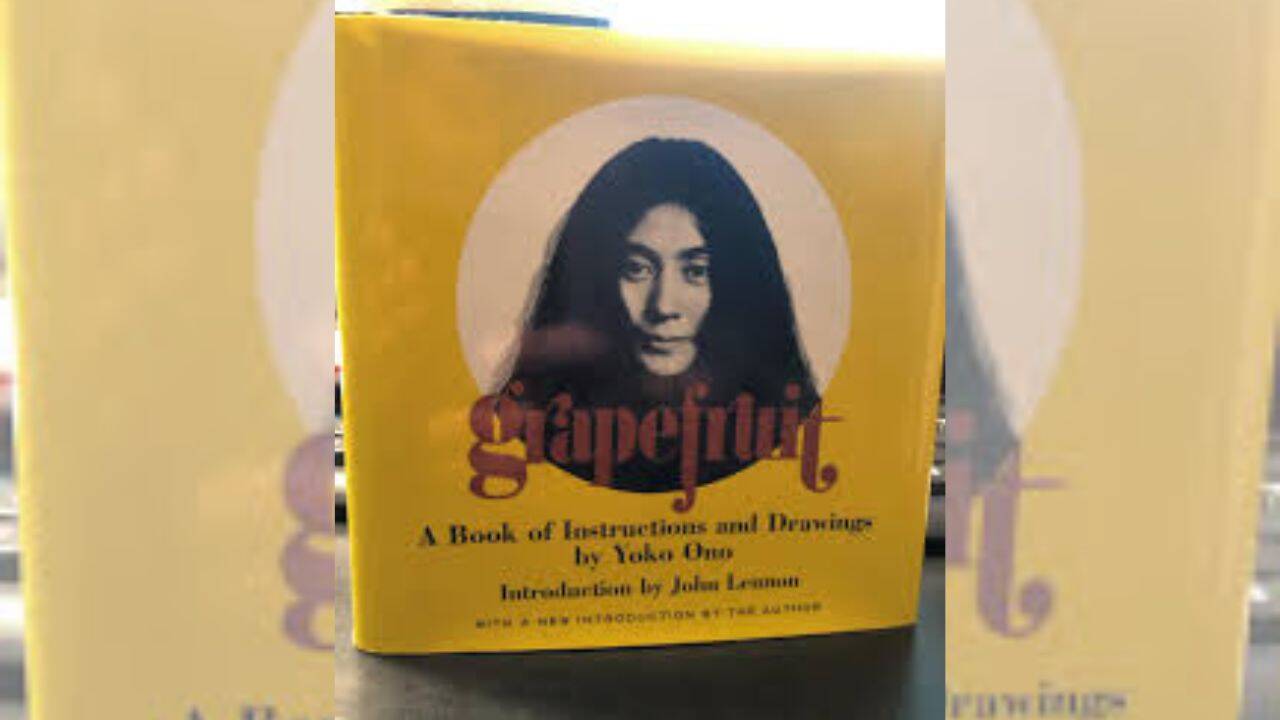

Around the same time, Yoko Ono asked, what if the artwork exists only when someone decides to act? Her 1964 book Grapefruit consists of spare, poetic suggestions like, “Light a match and watch till it goes out.” “ Imagine the clouds dripping. Dig a hole in your garden to put them in.” These were not metaphors. They were the artwork. Anyone could perform them – or not. Art existed as a possibility upon instruction, no longer an object, but an action.
Then, around 1974 Marina Abramovich entered performance art with a stark proposition: The artist’s body is the artwork. In Rhythm O at Galleria Morra in Naples, Italy, she stood naked and motionless for six hours next to a table with 72 objects including items for pleasure (like rose, honey and feathers) and pain (like scalpel, chains, and loaded gun). The audience was free to use the objects on her as they wished. She took full responsibility for any actions, which gradually escalated from gentleness to violence.

Galleria Morra in Naples, Italy
Initially marginal, her work later entered major museums. By the time of The Artist Is Present at MOMA, the endurance had been ritualised, carefully staged and fully documented, with authorisation of re-performances of her earlier works.
By the 1990s, museums had become adept at acquiring not objects but rights. Theatre had long functioned this way – one does not own a play, only the permission to stage it. Music operates similarly, through performance and licensing rights. Art institutions quietly absorbed this contractual logic. Ownership no longer required possession.
Sehgal inherits all three moves – event, instruction, embodiment but strips away their residual supports. No documentation, no written score, no fixed choreography. His work is transmitted orally and taught in person. There is no written contract describing the artwork, only a verbal agreement witnessed by lawyers. Editions exist, but scarcity is enforced through trust and institutional reputation rather than material proof. The museum hosts an idea in motion, and lets it disappear intact.
Because The Kiss is sold in limited editions rather than as a single unique object, multiple institutions own editions of the piece, MoMA being one, plus possibly some private collectors.
The last documented public performance took place in 2010, when the work was staged at the Guggenheim, on loan from MOMA…until it resurfaced during the Kochi–Muziris Biennale.

Guggenheim Museum New York
What The Kiss ultimately reveals is that ownership had already become abstract long before performance entered museums. Wealth now circulates as licences, copyrights, and access rights. Sehgal strips ownership of its last illusion – that it must be tangible. To own a kiss, it turns out, is simply to be authorised to let it happen – and then to let it go.
In a world saturated with images, disappearance acquires a spiritual weight. The very first verse of Ishopanishad reminds us that meaning is approached not through possession but through renunciation – Tena tyaktena bhuñjīthā. Enjoy by letting go.
Disclaimer
Views expressed above are the author's own.






Top Comment
{{A_D_N}}
{{C_D}}
{{{short}}} {{#more}} {{{long}}}... Read More {{/more}}
{{/totalcount}} {{^totalcount}}Start a Conversation