





This week’s historic BJP win in West Bengal brings a rare political alignment between New Delhi and Kolkata that could boost the connectivity agenda and help repair ties with Bangladesh.
It offers opportunities for the state to emerge as an economic hub tied to Bangladesh, and to uplift the entire East South Asia region through new transportation and energy infrastructure linking Nepal and Bhutan, the northeast region, and the Bay of Bengal.
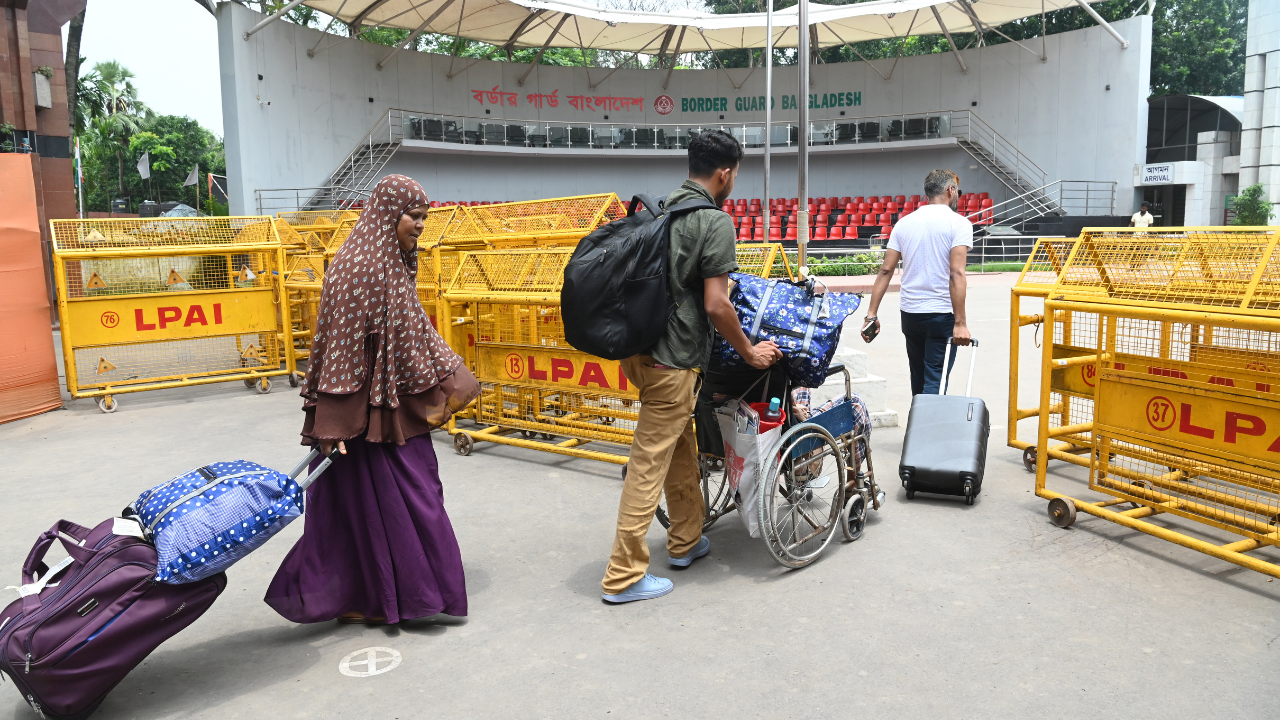

Border Bonhomie: Easing visa, travel and trade curbs, and improving connectivity, can bear benefits for Bengal
For years, the West Bengal government remained largely absent as a policy driver to enhance India-Bangladesh economic interdependence. It remained either opposed or uninterested, claiming marginalisation.
After vetoing the Teesta river deal in 2011 and only reluctantly supporting the Land Boundary Agreement in 2015, it became increasingly clear to New Delhi decision-makers that CM Mamata Banerjee was not willing to go out of her way to engage Dhaka. When Sheikh Hasina was in office, Kolkata could often be bypassed or ignored. But after her exit in 2024, this became unsustainable.
One example illustrates how Kolkata’s political calculations hindered the bilateral connectivity agenda. In Oct 2024, home minister Amit Shah inaugurated India’s largest and most modern passenger terminal at the Petrapole border with Bangladesh. This is South Asia’s busiest land port and economic lifeline of bilateral trade, accounting for over 50% of total commerce.
Coming just four months after Hasina’s exit, the inauguration also sent an important signal to the Yunus-led regime: despite political differences, India would continue to build cross-border connectivity for mutual developmental benefits for the sub-region. Yet, aside from Shah and other dignitaries attending the ceremony, the state govt was conspicuously absent — no CM, no minister, not even a department head.
There will be many post-mortem narratives about the Delhi-Kolkata political tensions and partisan differences, but one thing is certain: in recent years, India’s fourth-most populous state remained largely on the margins of the economic interdependence strategy being implemented with the world’s eighth-largest country, right next door.
This week’s political development is likely to alter that. It is particularly significant because it coincides with the change of guard in Dhaka, under a new BNP-led govt. Unlike Yunus, PM Tarique Rahman is both capable and willing to invest some of his political capital at home to normalise economic ties with India.
The state will also find new opportunities in Delhi, with PM Modi announcing a “new chapter” in bilateral ties.
The appointment of Dinesh Trivedi as India’s High Commissioner to Dhaka — with his vast experience in Kolkata — signals a clear commitment to repairing relations with Bangladesh, and giving the state a greater role through para-diplomacy. Assam exemplifies what can be achieved, as Guwahati has emerged as a sub-regional connectivity hub linking Bhutan, Bangladesh, and even Southeast Asia.
To normalise bilateral ties with Bangladesh, Kolkata’s role will become increasingly significant and a few options stand out. The most important option is on water and joint river management, which would entail reviving the Teesta deal.
Whether the Centre can deploy this as the mother of all confidence-building measures in Bangladesh will depend largely on how much political capital the new govt in Kolkata is willing to expend.
Second, India can unilaterally announce the lifting of trade restrictions and reinstitute the transshipment of export cargo from Bangladesh to third countries via ports such as Kolkata. This will benefit Bengal as an economic and maritime transit hub.
Third, India and Bangladesh must restart negotiations towards a Comprehensive Economic Partnership Agreement.
Success here will hinge on the willingness of the state govt and industries to drop protectionist measures, especially non-tariff barriers, to allow Bangladeshi exporters greater market access.
Fourth, recent visa and travel restrictions can be eased with significant returns for Bengal: before 2024, Kolkata was the main beneficiary of over two million visas issued annually to Bangladeshi citizens, generating revenue for the tourism, health and education sectors.
This growth-oriented mobility agenda will require smart governance solutions and decoupling from the politically charged immigration issue.
A final option relates to the state’s potential as a hub for sub-regional energy and transportation connectivity between Bangladesh, Bhutan, India and Nepal. After decades of delays, in 2024, India finally helped operationalise the first trilateral power transaction from Nepal to Bangladesh.
To sustain this momentum, the state will require massive investments to upgrade its road, rail, port, river, energy, and data links to form new multi-modal and economic growth corridors between Eastern India, Bangladesh, and the northeast states.
The selection and sequencing of these measures will depend on cost-benefit assessments by all sides, though many obstacles remain. But the Bengal poll results offer the possibility of a double Delhi-Kolkata engine to accelerate India’s connectivity strategy for Bangladesh.
Disclaimer
Views expressed above are the author's own.






Top Comment
{{A_D_N}}
{{C_D}}
{{{short}}} {{#more}} {{{long}}}... Read More {{/more}}
{{/totalcount}} {{^totalcount}}Start a Conversation