





Nautapa has just begun.
For generations across North India, Nautapa marked those familiar nine days of punishing late-May heat. People planned around it. Homes were built to endure it. Life slowed down in the afternoons and resumed after sunset.
But what India is experiencing now no longer feels like a difficult summer season.
It feels like a country negotiating thermal survival.
And the clearest sign of that shift is not the temperature reading.
It is India’s electricity demand.
This summer, India hit a record peak power demand of 270 GW as extreme heat spread across large parts of the country. State after state is witnessing unprecedented cooling demand.
In Uttar Pradesh, which is home to one sixth of India, peak electricity demand crossed 31,000 MW just before Nautapa began. Roughly 15 years ago, that number was nearly half of what it is today. At one point, UP recorded higher electricity demand than several industrial states.
That statistic deserves deeper attention because it reveals something fundamental about modern India:
Electricity demand is no longer merely aspirational demand.
It is becoming thermal demand.
For decades, rising electricity consumption was viewed as a sign of development. More appliances, more industries, more prosperity, more upward mobility.
But increasingly, India’s rising power consumption is being driven by something far more basic: the human body’s inability to cope with the outdoors.
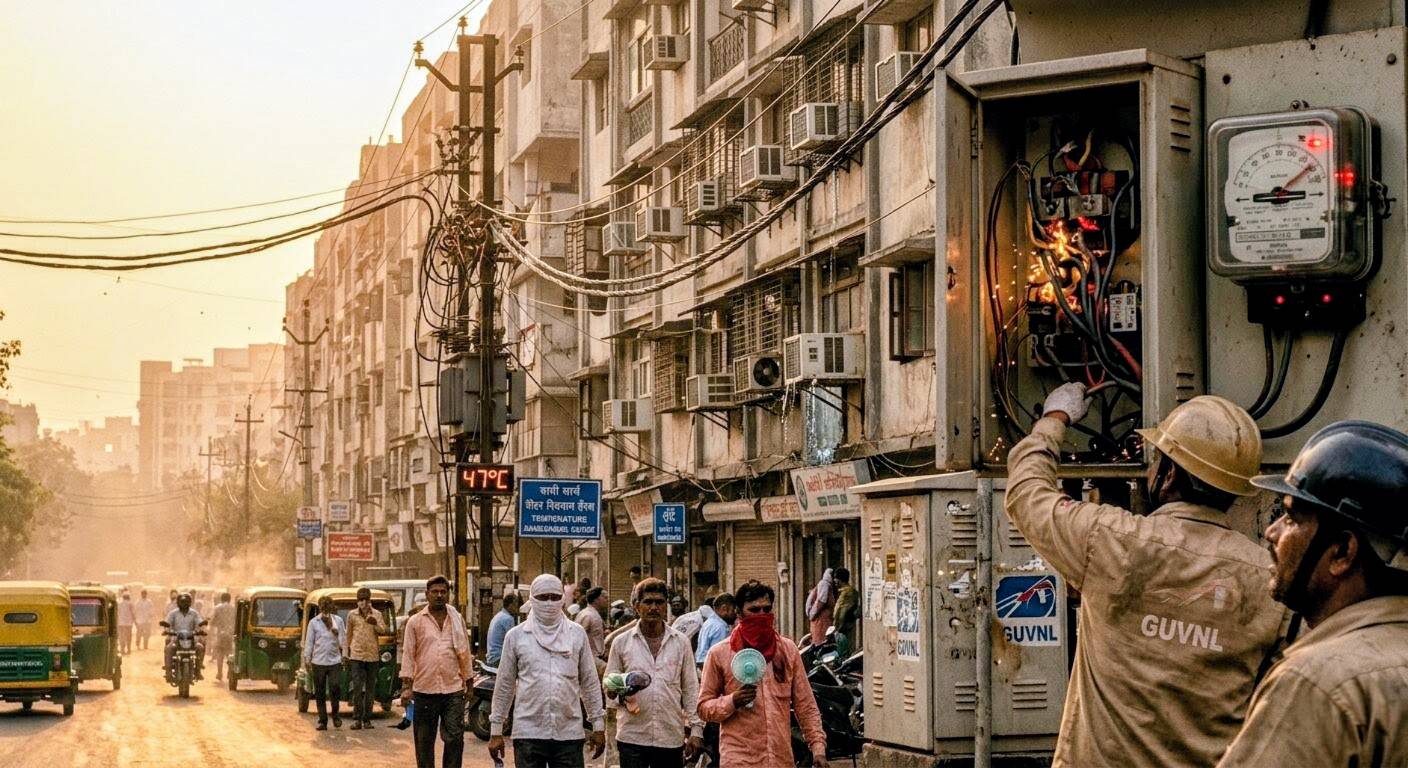

That is an extraordinary shift for a developing economy.
The conversation around heatwaves often remains trapped in maximum temperatures.
45°C.
46°C.
48°C.
But the real transformation is happening elsewhere.
Nights are getting hotter.
Humidity is rising.
Concrete-heavy cities are trapping heat long after sunset.
The body is losing its recovery window.
Data increasingly shows that India’s heatwaves are becoming longer, more humid, and more physiologically stressful. Compound hot-humid days across India jumped from 14,086 to 16,970 within just one decade. Humidity itself is now sharply increasing “feels-like” temperatures and extending cooling demand well past midnight.
Disclaimer
Views expressed above are the author's own.






Top Comment
{{A_D_N}}
{{C_D}}
{{{short}}} {{#more}} {{{long}}}... Read More {{/more}}
{{/totalcount}} {{^totalcount}}Start a Conversation