





Ever since BJP ousted Trinamool Congress from office, social media has been up in arms.
A friend who opposed BJP is so upset, she is pruning her friends list of those rejoicing at the verdict. Friends who had never seemed political are suddenly posting mocking memes about Mamata Banerjee and posing in orange outfits.
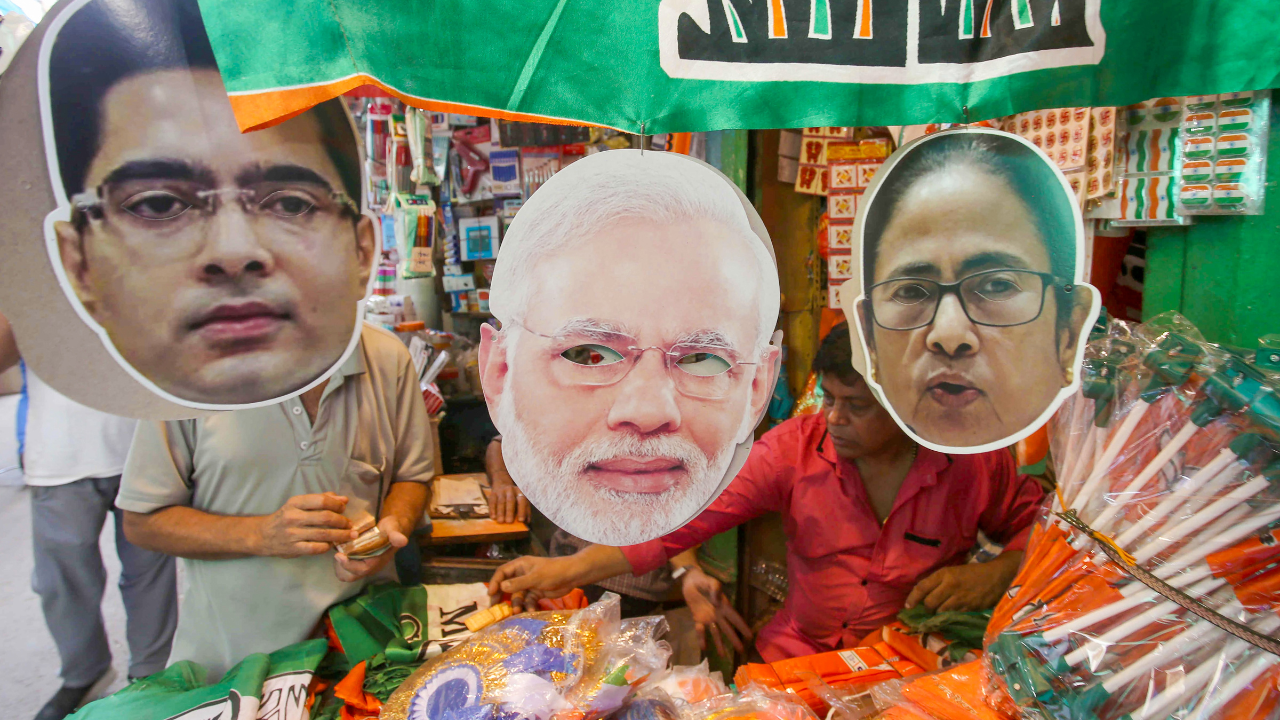

Virtual war: Politicians switch parties like jobs, but ordinary people have to bear the cost of social media outrage
Everyone is reading between the lines of everyone else’s status updates to see where they stand in the new order of things. Someone shared a picture of a Bengali television anchor and knowingly noted the colour of his tie.
Someone accused someone of supporting bigotry because of what they posted. Someone accused someone of supporting bigotry because they posted nothing at all.
Retired civil servant Jawhar Sircar, who resigned after a brief tenure as a Rajya Sabha MP for Trinamool, said in an interview, “I have never seen such antagonism in an election before. There is so much hatred on each side.”
Bengal is famous for the tea shop adda, where everything from politics to football is discussed with furious passion but, at the end, all sides share cups of tea together.
In the online world, there is furious passion but no shared cup of tea. “Voters and citizens have been acting like trolls,” rued Sircar. “This trollisation of the voter is a new phenomenon.”
I grew up on a street where three brothers who lived next door all vehemently supported different political parties. On Netaji’s birthday, the brother who supported Subhas Bose’s Forward Bloc always hung a giant portrait of Netaji from the balcony which belonged to another side of the family that supported the Congress.
But CPI(M), CPI, Forward Bloc and Congress all seemed to live amiably enough in the same house. Now, we can barely co-exist on the same social media platform.
The difference is, these days we are fed an intravenous drip of 24×7 WhatsApp forwards, Facebook posts and Instagram reels. Social media algorithms keep delivering us the content it knows will feed into our sense of outrage and keep us hooked. It’s like junk food for our ideological appetites.
This ideological polarisation gets more and more hard-baked in us, encouraged by the IT cells of political parties who keep feeding us information that will keep us in a state of perpetual ravenous frenzy while they practise business as usual.
So Raghav Chadha switches from Aam Aadmi Party to BJP as calmly as someone switching jobs, as if everything he once said about BJP is of no consequence anymore. Congress supports DMK but, once it loses, it seems happy to tie up with the winner, C Joseph Vijay’s TVK. Mukul Roy, once regarded as the architect of Trinamool’s victory in Bengal, switched over to arch-rival BJP in 2017 and took a parade of Trinamool office-bearers in his wake, all hoping their acche din was on hand.
But Roy eventually returned home in 2021, and much of his retinue followed suit completely unembarrassed by the U-turns.
BJP’s giant-killer in Bengal, Suvendu Adhikari, himself was at one time Mamata Banerjee’s strongman. The ideologies of parties are supposed to be poles apart, but that doesn’t stop them from poaching each other’s top players as if they are rival football teams.
The dust has not yet settled in Bengal but one can already sense some political leaders getting ready to change colour, so much so that Trinamool has set up a disciplinary committee to take action against leaders who speak against the party publicly.
Aaya Ram Gaya Ram has always been part and parcel of politics. The term itself dates back to Haryana in the 1960s, where one Gaya Lal changed his party allegiance thrice in rapid succession. It just shows that in the end, for many politicians, the real ideology they believe in is simply power.
The true loyalty to ideological beliefs is left to the citizens who put their faith in them. Old grand ideologies are supposed to be in decline in a post-Communist world, according to the famous essays by Daniel Bell which defined commitment to ideology as “the yearning for a ‘cause’ or the satisfaction of deep moral feelings.”
That commitment and yearning might now be the preserve of those of us fighting on social media in the aftermath of an election.
But even then, the real cost will as always be borne not by those of us unfriending each other on social media, or even those switching parties in the halls of power, but ordinary people caught in the crossfire of the Rams who are gaya and the Rams who are newly aaya.
They are the ones with the bullet wounds, broken bones and burned homes.
Disclaimer
Views expressed above are the author's own.






Top Comment
{{A_D_N}}
{{C_D}}
{{{short}}} {{#more}} {{{long}}}... Read More {{/more}}
{{/totalcount}} {{^totalcount}}Start a Conversation