
Trending
This story is from December 20, 2022
Maruti Suzuki started as a company with no hope: R C Bhargava
Ravindra Chandra Bhargava Maruti chairman: Speaking of future growth, he said that the present government has made efforts to improve things and make the business environment easier but the desired result is yet to be seen. He attributed this partly to the policies that are not friendly for businesses in some states of India and how their policies do not align with that of the central government.
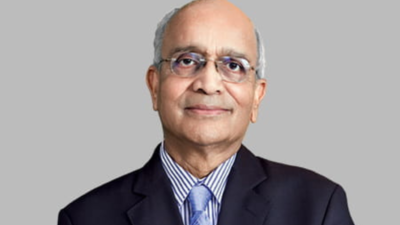
Looking at the sales numbers and the balance sheet of Maruti Suzuki it's almost impossible to imagine any struggles for the company. In fact, the company with the largest market share in India enjoys a healthy lead over its rivals. Hence, it came as a surprise when R C Bhargava, Chairman, Maruti Suzuki, said that the company started out as a company with no hope. Speaking at a press meet, Bhargava said that when Maruti Suzuki started operations in 1981, the company started out as a company with no hope.
This was primarily due to the company starting its operations in a socialist economy. He added that at that time the economic environment wasn't great and the PSUs (Public Sector Undertaking) weren't performing well. Cars were at the bottom in terms of priority for the government but were one of the highest-taxed products.
"No one thought at that time that India would become the fourth-largest car market in the world", he added. However, Maruti Suzuki defied all odds and went on to become a successful example of Indo-Japanese collaboration. Bhargava said this was mainly down to the way the Japanese and Indian work cultures were merged to form a new work culture for Maruti that enabled better results.
The journey to becoming the largest carmaker in the country, however, wasn't easy for the company. Bhargava said the company not only survived but achieved feats such as helping develop a vendor ecosystem that continues to play an instrumental part in the company's dominance over the market. "What works in Europe or elsewhere in the world cannot be copy pasted in India for success. At Maruti Suzuki we developed an ecosystem that drew upon the best practices from the management practices of India and Japan to suit the Indian market", he added.
Speaking of future growth, he said that the present government has made efforts to improve things and make the business environment easier but the desired result is yet to be seen. He attributed this partly to the policies that are not friendly for businesses in some states of India and how their policies do not align with that of the central government.
He also stressed on the fact that in the end if India is to grow to its true potential, manufacturing needs to improve vastly. Referring to improvement in manufacturing, Bhargava added that Maruti Suzuki has also set up a foundation that will help improve local manufacturing further by drawing upon the learning of the Indo-Japanese collaboration for Maruti Suzuki over the last 40 years.
This was primarily due to the company starting its operations in a socialist economy. He added that at that time the economic environment wasn't great and the PSUs (Public Sector Undertaking) weren't performing well. Cars were at the bottom in terms of priority for the government but were one of the highest-taxed products.
"No one thought at that time that India would become the fourth-largest car market in the world", he added. However, Maruti Suzuki defied all odds and went on to become a successful example of Indo-Japanese collaboration. Bhargava said this was mainly down to the way the Japanese and Indian work cultures were merged to form a new work culture for Maruti that enabled better results.
The journey to becoming the largest carmaker in the country, however, wasn't easy for the company. Bhargava said the company not only survived but achieved feats such as helping develop a vendor ecosystem that continues to play an instrumental part in the company's dominance over the market. "What works in Europe or elsewhere in the world cannot be copy pasted in India for success. At Maruti Suzuki we developed an ecosystem that drew upon the best practices from the management practices of India and Japan to suit the Indian market", he added.
Speaking of present times and the challenges ahead, Bhargava said that India is one of the most heavily taxed countries in the world in terms of car ownership. He also mentioned how too many slabs in the taxation structure make things difficult for the companies as well as consumers. At the same time, he also mentioned that shrugging off the legacy burden of old governance will take some time as the government also needs to ensure that immediate revenues aren't affected negatively.
Speaking of future growth, he said that the present government has made efforts to improve things and make the business environment easier but the desired result is yet to be seen. He attributed this partly to the policies that are not friendly for businesses in some states of India and how their policies do not align with that of the central government.
He also stressed on the fact that in the end if India is to grow to its true potential, manufacturing needs to improve vastly. Referring to improvement in manufacturing, Bhargava added that Maruti Suzuki has also set up a foundation that will help improve local manufacturing further by drawing upon the learning of the Indo-Japanese collaboration for Maruti Suzuki over the last 40 years.

About the Author
Arpit MahendraEnd of Article
FOLLOW US ON SOCIAL MEDIA
Visual Stories



Hot Picks
TOP TRENDING
Trending Stories
In Auto
Entire Website
- Tata electric cars get big discounts of up to Rs 3 lakh, free charging and more
- Delhi drivers to get 50 percent discount on traffic fines: Here's how it works
- Karnataka man burns down Ola showroom over grievance: Company responds
- Modi Govt launches 'PM E-DRIVE' scheme with Rs 10,900 crore outlay for EVs: Details
- MG Windsor EV launched at Rs 9.99 lakh: Pay-per-km plan takes on petrol cars!
- Govt introduces free highway travel for private cars, with a condition: Details
- September 2024 auto launches: Hyundai Alcazar, MG Windsor EV, Tata Nexon CNG, and more
- Honda's first EV two-wheeler in FY25: Electric Activa on cards?
- Massive discounts of up to Rs 2.05 lakh on Tata cars: Tiago, Nexon, Harrier and more!
- Hyundai Alcazar facelift launched at Rs 14.99 lakh: Variant prices, changes and more
- 'Waited for 2 hours': Mamata on meeting with doctors as deadlock over live streaming continues
- 'Leading light of the Left': Sitaram Yechury passes away; PM Modi, Rahul condole demise
- Why you should not be fooled by ‘20-year SIP crorepati’ dream
- Watch: SpaceX conducts first private spacewalk; key details
- Engineer Rashid says ready to support INDIA bloc but on this condition
- Moin blasts Ramiz Raja for 'demoralising' son Azam
- Why this Kerala beach is divers’ envy, drivers’ pride
- What Airtel CEO Gopal Vittal wrote in letter to Jio, Vi, Tata Tele and BSNL CEOs
- DGCA to conduct safety audit of all flying schools; 33 to be checked in 3 months
- When Rohit became second fastest batter after Kohli to achieve this feat

Popular Categories
Hot on the Web
Top Trends
Trending Topics
Alia BhattMalaika Arora Father DeathArbaaz KhanNatasa StankovicMr Bachchan OTT ReleaseNational Parks In IndiaSelena GomezGOAT CollectionVikas Sethi DeathMalayalam ProducersIndia's Best Dancer 4Simi GarewalDilli BabuIndian National ParksLaung BenefitsVikas SethiiPhone 16Dubai Princess Sheikha MahraMG Windsor EvWordle Answer
Living and entertainment
Latest News
Epilepsy medication shows promise of treating sleep apnoea symptoms: StudyDigest this: Unhealthy gut may be linked to Parkinson’s disease'Played a big role in turning the cricket around': Ricky Ponting applauds Virat Kohli’s brilliance as India’s former captainAadhaar card update: Do you have to compulsorily update details on your Aadhaar every 10 years?Single Indians are now choosing slow, meaningful dates over-elaborate outings, reveals an online dating platform’s surveyExclusive- Saurabh Gumber reveals joining a new show during Ganeshotsav says, "I consider it as Bappa's small gift and believe he has great plans for me ahead"Pakistan: Bilawal cautions Shehbaz govt against political victimisation, points to Imran Khan's caseMahindra Thar Roxx with VIN 0001 to be auctiond for charity: How to registerVijay Sathya-starrer 'Dhil Raja' to release in SeptemberHarvard University Sees Drop in Black Freshman Enrollment Post-Supreme Court Ruling on Affirmative ActionFinding divinity in a world addicted to noiseTovino Thomas praises Prithviraj Sukumaran as director: "One of the brilliant directors I have ever worked with"Border Gavaskar Trophy: When Sourav Ganguly's Brisbane heroics set the tone for an enlivening seriesNTR Jr’s Devara crosses US $1 million mark for its premiere shows in USA with 15 days to release8 animals that reproduce without matingIt will take time to get back to the top: Pakistan coach ZamanThe Luckiest Zodiac Signs: Who's Got the Midas Touch?EXPLAINED: What India need to do in next 10 Tests to qualify for World Test Championship final
Copyright © 2024 Bennett, Coleman & Co. Ltd. All rights reserved. For reprint rights: Times Syndication Service