- News
- entertainment
- hindi
- music
- I sing my heart out and don’t expect: Keerthi Sagathia
Trending
This story is from August 9, 2013
I sing my heart out and don’t expect: Keerthi Sagathia
Keerthi Sagathia, who features on several tracks and has had a busy year, philosophises about struggles in life and music among other things and talks about taking each day as it comes.
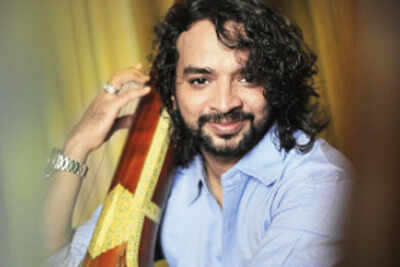
You’ve had classical training — first from your father Karsan Sagathia and then from two other gurus. How exactly does classical training expand or restrict one’s range?
It didn’t restrict or expand my singing range as such, but rather helped me understand what I was blessed with.

You've been singing a long time. What were the high and low points?
As an artist, I can’t describe highs and lows. Life is an everyday struggle. You could say that we artists live on daily wages. You work today, you feed your family. If there’s no work, you struggle to feed your family. I’m a man who doesn’t depend on tomorrow. My today is what describes me. For example, if I have a recording or a show today, I experience a high of life. If I don’t have anything to do today, I am low. Lows keep me busy by making me do my riyaz more intensely and highs keep me busy by applying my riyaz to recordings or performing on stage.
How do you deal with success and failure?
Failures teach me to live through the struggle of life and success helps me guide new talents through my experiences. Johnny Lever, who is like a father to me, taught me to learn from failure, because they will help you remain humble while you enjoy your success and not get carried away by the glamour of it. My experiences teach me to live my life.
The singularly most profound moment in your playback career this far?
My dad struggled a lot in life. He taught me not to raise expectations from life. So I sing my heart out and don’t expect anything. When I got my first award (for Beera Beera from Radio Mirchi in 2010) it was a truly profound moment that I could give my dad. Kavita Krishnamurthyji whispered in my ear, ‘This is not the only one, there are many more to come.’ This voice is still so clear in my ears. I received one more award this year for Satyamev Jayate, the show’s title track.
You’ve had a good run this year so far, though some have come with the ‘additional vocals’ tag. How does that not affect you?
I’ll repeat myself... I don’t build expectations. For example, Wajidji is like an elder brother to me. When I go to sing for Sajid and him, I hear the song and if the song is composed beautifully, I don’t forcefully ‘add’ my voice. I’d rather ‘enhance’ it with my voice. If the song doesn’t demand my voice, I don’t force myself.. In Bullet Raja, we did one song which needed my portions and the second song Wajidji sang beautifully so I enjoyed giving backing vocals.
How did Tum Tak happen? Why were two male voices required for that song?
Why were two voices required? That answer can be given by AR Rahman himself. The song itself has two genres — I’ve sung one and Javed Ali has sung the other, but in the last stanza both genres blend so beautifully that people feel it’s just one voice. That’s the magic of Tum Tak. I’ve been blessed with this song. My portions resemble me as a person and my faith in The Almighty. Though two of us have sung the song, people have recognised my voice and appreciated it a lot.
Ram Sampath and you make a good singer-director combination. The music thereof turns out to do really well. Why do you think that is?
My relationship with Ram Sampath has lasted a decade. We’ve worked together often in all that time. He knows my strengths as a singer and I know his mind as a director. When we work together, the moment is something different. There have been times when Sona Mohapatra stays back to see us working together and after looking at the outcome, remarks ‘You both are crazy’... Ram and Sona have always stood for me. When he calls me for a recording, I am boosted up because I know there is a new, crazy idea and I am ready to jump.
Your faith has been an important part of your journey — personally and professionally. Care to share more about this?
My faith has been very important to me. I believe in the existence of God, but even more, in a loving God — Jesus. I attribute all that I am to God.
What's next? Have any independent/ non-film projects planned?
Next up, I have Satyagraha, Ramleela, Bullet Raja, etc. Come August, I’m coming up with a single. Apart from that, I enjoy singing for more movies, jingles and concerts.
End of Article
FOLLOW US ON SOCIAL MEDIA








Photostories
entertainment videos
Featured In Movies

Popular Categories
Entertainment NewsBollywood NewsTollywood NewsKollywood NewsMollywood NewsMovie ReviewsLatest Hindi MoviesLatest Tamil MoviesMX PlayerParenting TipsHome RemediesWeight LossBeauty TipsParenting TipsHindi VideosHindi Video SongsBhojpuri Music VideosLatest Telugu MoviesBhojpuri Music VideoHindi TV News
Trending in Entertainment
Latest MoviesBollywood MoviesHollywood MoviesTamil Movies 2024Telugu Movies 2024Malayalam Movies 2024Kannada Movies 2024Marathi Movies 2024Bengali Movies 2024Top Rated Movies 2024Best Hindi MoviesBest English MoviesBest Telugu MoviesBest Tamil MoviesBest Malayalam MoviesBest Kannada MoviesBest Bengali MoviesUpcoming Hindi MoviesBest Movies Of All TimeBest Hindi Movies of All Time
Trending in Etimes
Horoscope TodayNumerology Predictions TodayAustria ElectionJoe BidenKamala HarrisPopulated Indian CitiesAlcohol Cancer RiskIsrael Beirut WarSunita WilliamsIsrael Hezbollah WarNepal FloodBarbra StreisandSnoring Prevention TipsDonald TrumpMagnesium DeficiencyRelationship TipsLake Michigan DiscoveryElon MuskEkadashi in October 2024
Trending in TV
Trending in Lifestyle
Trending in Regional
Movie Reviews
Binny And Family ReviewLove, Sitara ReviewWill & Harper ReviewWolfs ReviewYudhra ReviewJo Tera Hai Woh Mera Hai ReviewKahan Shuru Kahan Khatam ReviewHis Three Daughters ReviewNever Let Go ReviewDancing Village: The Curse Begins ReviewTransformers One ReviewFirst Love ReviewBerlin ReviewThe Buckingham Murders Review
Upcoming Hindi Movies
Upcoming Regional Movies
Latest News
Zodiac Signs as Romantic Movie CouplesJapanese artist’s tribute to Indian classical dance formAnanya Panday unveils her Amol Palekar-inspired look in quirky BTS PICS from 'CTRL’Sanjay Dutt celebrates 'Gandhigiri', shares a scene from 'Lage Raho Munna Bhai'Women's T20 World Cup 2024: Teams, format, venues, defending champions and more FAQs answeredGovinda's bullet injury: Mumbai police not convinced with actor's version but rule out foul playGovt proposes to bring motorcycles under ‘contract carriage’ by amending MV ActHaircuts and colours to try out this PujoTriptii Dimri denies skipping the Jaipur event after allegations of charging an appearance feeMaharashtra assembly polls: Deputy CM Ajit Pawar meets Union home minster Amit Shah amid Mahayuti tensions over NCP, seat-sharingWatch: Orry channels Aishwarya Rai in a hilarious tribute to Shah Rukh Khan and Amitabh Bachchan starrer 'Mohabbatein'NFL insider reveals Raiders’ asking price for star wide receiver Davante Adams amid trade speculationAnanya Panday on being called the upcoming Alia Bhatt: I can't touch what she has doneFormer WWE Champion Jeff Hardy talks about “addiction struggles”'Scam marathon' under JMM-Congress-RJD rule 'biggest obstacle' to Jharkhand's development: PM ModiWhy you must run in the morning on an empty stomachManipur CM Biren Sing bats for political talks to resolve crisis in stateWHO chief praises PM Modi on 10th anivarsary of Swachh Bharat mission
Other Group Sites -
ETimes is an Entertainment, TV & Lifestyle industrys promotional website and carries advertorials and native advertising.